Akron, Ohio, the fifth largest city in the state, has shown new vitality in economic development, industrial transformation and population mobility in recent years.
With the revival of the U.S. manufacturing industry and the migration of the technology industry, Akron’s real estate market is attracting more and more investors’ attention.
1. Overall Market Overview
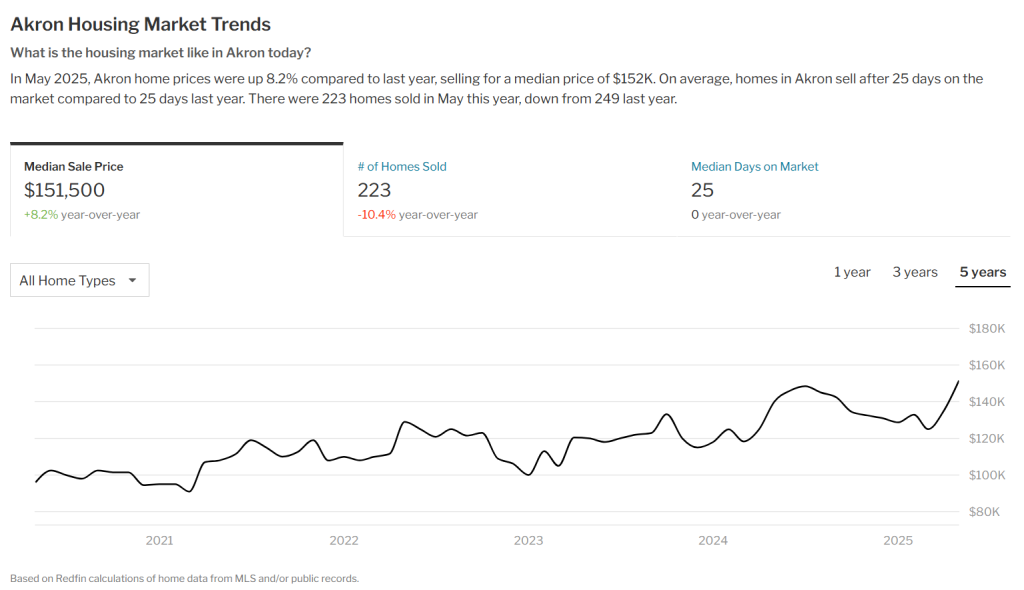
Redfin data shows that the median transaction price in May reached $151,500, up 8.2% year-on-year.
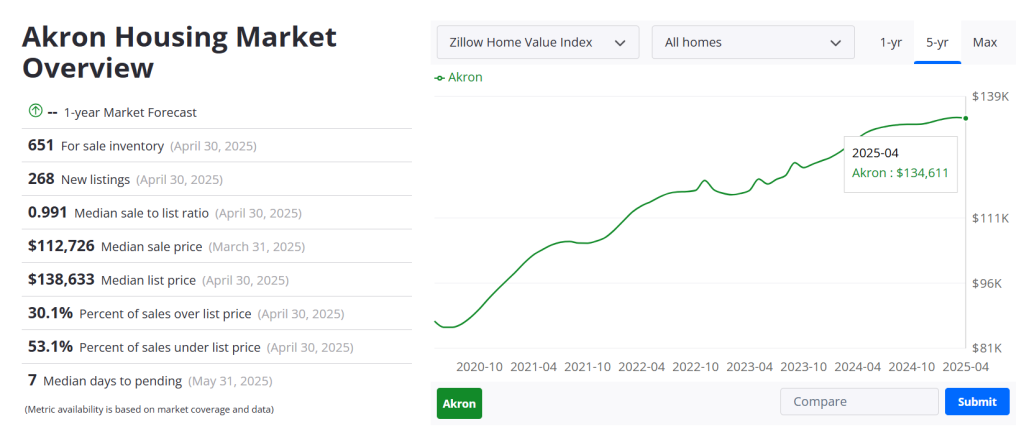
Zillow data shows that the average home price in Akron in April was $134,611, up 3.5% from the same period last year.
Overall, Akron’s housing prices continue to rise, with a growth rate between 3-8%, making it suitable for long-term investors.
2. Market supply and demand analysis
- Inventory remains tight, showing clear characteristics of a seller’s market.
Zillow data shows that as of the end of April, there were only 651 homes for sale. The median sale-to-list ratio was 99.1%, and the median days to pending was just 7 — indicating a booming market.
- Rental market heats up
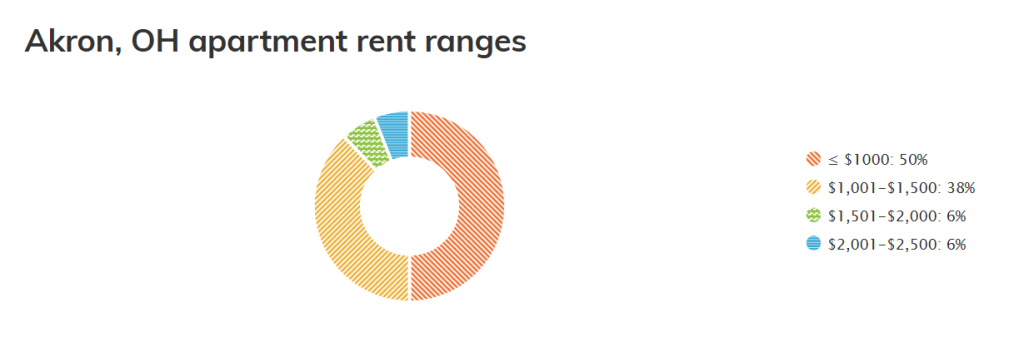
The average rent for an apartment in Akron is $1,103, with a increase of 2.8% in the past year, averaging $25 more per month.
Akron’s occupancy rate is 49%, much higher than Ohio’s 33%.
- School districts and healthcare drive growth potential
Akron is an educational and medical center with large institutions such as the University of Akron, residential care centers, Goodyear, and FirstEnergy. The residential areas around the campus (University Park) are particularly active and have obvious rental advantages.
3. Key investment areas
- Downtown Akron
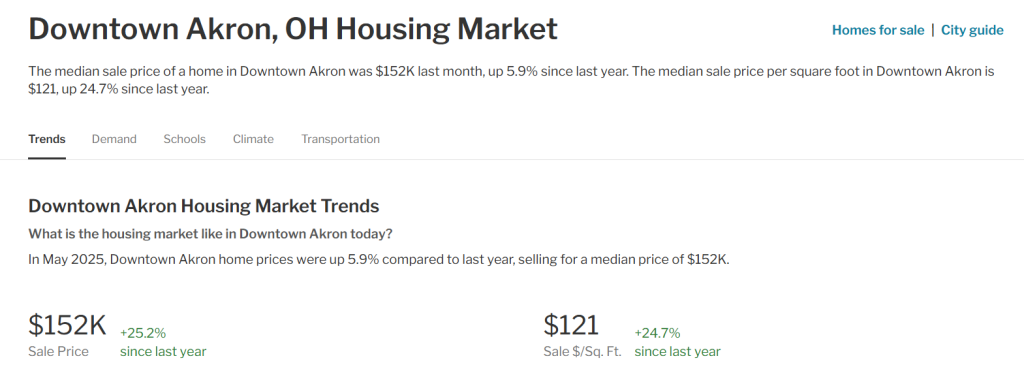
Redfin reported that the median sale price of a home in Downtown Akron was $152K last month, up 5.9% since last year. The median sale price per square foot in Downtown Akron is $121, up 24.7% since last year. With significant appreciation potential.
- University Park
Around universities, the traditional student rental market is active and suitable for short-term or long-term rental models.
- Merriman Valley
Located near Cuyahoga Valley National Park, it has a beautiful environment and is suitable for family living. In recent years, the number of newly built communities has increased, leading to notable home price appreciation, making it suitable for medium- to long-term hold investments.
- North Hill
In multicultural communities, the growth of the immigrant population drives rigid housing demand. The area has lower house prices but great renovation potential, making it suitable for the “buy-renovate-rent” strategy.
4. Policy and macro environment
- Urban Renewal and Infrastructure
In recent years, the Akron government has promoted the reconstruction and renewal of downtown and the university district. The old commercial buildings(Quaker Square) are expected to be transformed into new formats such as food markets. Such projects will enhance the area’s commercial and residential appeal, creating premium opportunities for investors.
- Climate advantage support
Akron has been rated as a low-climate-risk city in the Midwest, with only 1.8% of properties facing significant climate hazards.
5. Investment strategy advice
- Short-Term Renovation-Rent-Out Strategy (BRRRR)
With cost-controlled renovations in mid-to-low priced older properties, investors can achieve substantial returns through either rental income or resale.
- Long-term rental investments in university-adjacent areas
Purchase small apartments in University Park or Downtown, targeting students and government tenants.
- Follow the layout of urban renewal projects
Focus on properties adjacent to ongoing developments like Quaker Square and Riverwalk.
- Mixed investment portfolio
Including rental, renovation and commercial leasing properties, building a stable and risk-diversified portfolio.
6. Risks and Precautions
- Small market size and limited liquidity
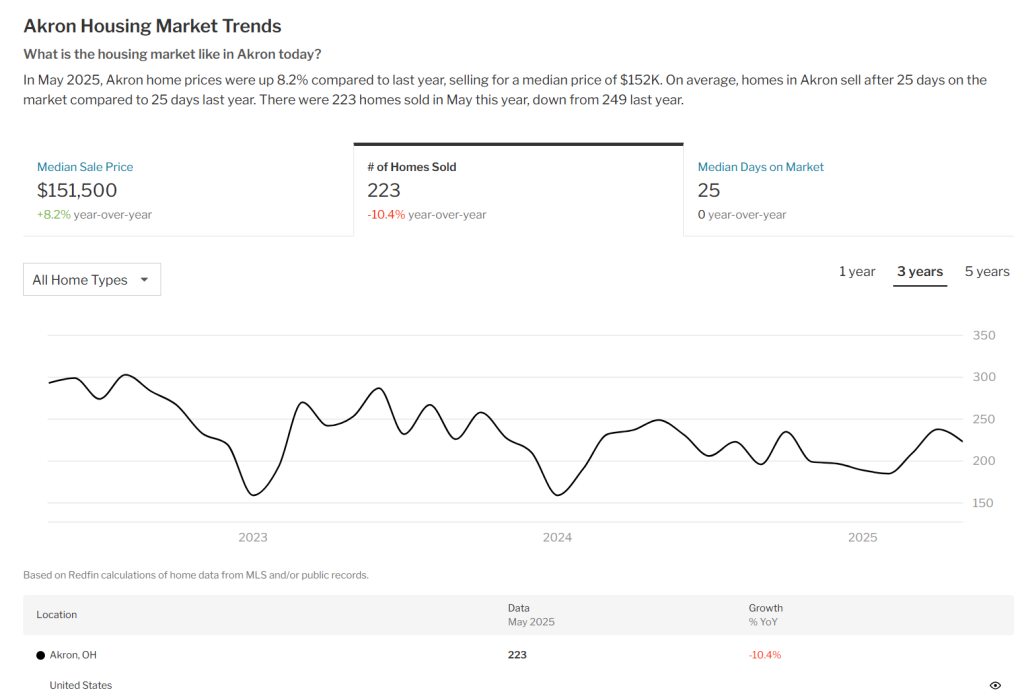
According to Redfin data, Akron home sales down 10.4% from last year.
Although Akron is a regional center city, its overall market size is smaller than that of Cleveland, Columbus, etc., and the property turnover cycle may be longer.
- Renovation costs in some areas are uncontrollable
Akron has a large number of older homes built between the early and mid-20th century. Many of these properties come with hidden issues such as outdated electrical and plumbing systems, foundation settlement, lead paint, and asbestos, which can easily lead to renovation costs exceeding the original budget.
- Rental ceilings limit cash flow growth
Although rents in Akron have increased in recent years, they are still at a medium-low level overall. There is limited room for rent increases, which may result in the rental return rate (Cap Rate) being lower than expected.
conclusion
Akron has multiple advantages, including controllable prices, stable rental demand, concentrated educational and medical resources, and future urban renewal plans. 2025 is a good opportunity to enter the market. Investors can formulate a clear investment strategy (renovation, rental or value appreciation) to achieve both long-term capital growth and steady cash flow.
Related Reading