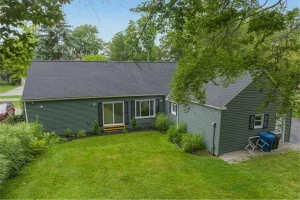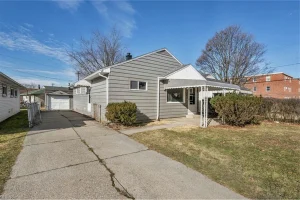
In recent years, the Hudson, Ohio real estate market has become popular with many buyers and investors.
This small city in the Cleveland metropolitan area has attracted many families to settle in the area due to its quality living environment and educational resources, and has made real estate a highly sought-after investment.
However, does the heat behind the market mean that now is the best time to get in?
In this article, we will focus on the current market trends, regional values, and potential risks, and introduce how to determine whether Hudson Ohio real estate projects are worth investing in.
Current Hudson Real Estate Market Trends
When investing in real estate, you must first understand the overall dynamics of the market. Changes in home prices, supply of listings, and transaction activity will affect the return on investment and the level of risk. You can analyze this data to see if the market is in a buyer’s or seller’s advantage.
Changes in Housing Prices
Over the past year, home prices in Hudson have maintained their overall upward trend with no significant signs of adjustment.
According to the most recent data, the median price of a home in Hudson has risen by about 10% over the past 12 months, which is among the highest rates in Ohio.
By comparison, neighboring Summit County saw an overall home price increase of about 8.5%, while other major cities in the state, such as Cleveland and Cincinnati, generally saw increases of between 5% and 7%.
Hudson’s more solid gains also reflect the continued appeal of the area to buyers.
For those of you who are considering investing in or purchasing a home, this means that the Hudson market is still on the upswing, but the gains are rationalizing, and the risks are relatively manageable. Do you think this is the kind of market performance that meets your investment expectations?
Number of listings and buying and selling activity
| Indicator | Details | Data Source (Example) |
| Housing Supply | Inventory down about 15% year-over-year; high-end homes especially tight | 2024 Market Reports, Redfin |
| Average Days on Market | Decreased from around 30 days to about 20 days; popular listings sell within two weeks | Zillow, Market Statistics |
| Buyer Competition Level | About 25% of homes sold above listing price, with average premiums of 3%–5% | Redfin Sales Data, Zillow Analysis |
The supply of listings in Hudson has tightened, the sales cycle has shortened significantly, and buyers are competing fiercely, with premium sales occurring frequently.
This indicates that demand is still strong, and you need to react quickly and develop a sound bidding strategy if you want to successfully purchase properties. Are you ready for such market challenges?
Key Factors Affecting the Market

Seeing the trend in home prices and the heat of the market, many people may ask: Why is the Hudson real estate market doing what it is doing?
In fact, the market is related to local living conditions, population movement, employment, and other real-world factors. To give you a more complete understanding of this market, what key factors are actually influencing the direction of Hudson real estate will be analyzed next.
Hudson’s Urban Positioning and Demographics
Conveniently located in Northeast Ohio between Cleveland and Akron, Hudson is the quintessential commuter satellite city. Although the city is small in size, it is mature in its overall planning and has long been positioned as a high-quality residential community, focusing on quiet, safety, and abundant educational resources.
According to the U.S. Census Bureau for the year 2023, Hudson has a population of approximately 22,200, which has sustained modest growth over the past five years, suggesting that the city’s attractiveness is stable but not overextended.
Demographically, Hudson’s residents are generally well educated. Over 68% of adults have a bachelor’s degree or higher, well above the Ohio average (approximately 30%). Additionally, there is a high percentage of middle- and upper-income households with a median household income of over $140,000 per year, reflecting residents’ spending power and stable housing needs.
These stable, middle-class neighborhoods with a concentration of educational resources do not change as quickly as first-tier cities but form a relatively healthy real estate market precisely because of their robust structure and strong residential attributes.
Would you value high-speed development or this stable and orderly urban rhythm more when considering investment or owner-occupation? This may be a point to ponder before making a decision.
School Districts, Quality of Life & Commuting Convenience

School districts, living environments, and commuting convenience are definite concerns for many families.
Hudson’s school district has long been ranked among the top in Ohio. According to the 2024 rankings from education review site Niche, the Hudson City School District is rated A+, and Hudson High School is ranked in the top 10 percent of high schools in the state. The high quality of public education attracts a large number of homebuyers with children, which in turn drives demand for mid- to high-priced homes and preserves property values.
Additionally, the overall atmosphere in Hudson is quiet, and the neighborhood feels safe. According to publicly available statistics from the FBI, the city’s violent crime rate and property crime rate in 2023 were significantly lower than the national average, making it a typical low-risk city to live in. Meanwhile, the city’s green space is well planned, with community parks, trails, and mature trees commonly found around residential neighborhoods, making it suitable for daily living and recreation.
Moreover, Hudson is conveniently located between Cleveland and Akron, with a 40-minute and 25-minute drive to both cities, respectively. Even if people work in the city or live in the suburbs, they don’t have to spend a long time traveling.
Risks and Opportunities from an Investment Perspective
In addition to looking at the price of a home, when investing in a home, you’re really more concerned about whether you’re going to make it back, what the rents are going to be like, and how much pressure you’re going to put on your mortgage.
How do these factors fare in the Hudson market? What are the details that different buyers should pay attention to? Let’s move on.
How Is the Hudson Rental Market Performing?
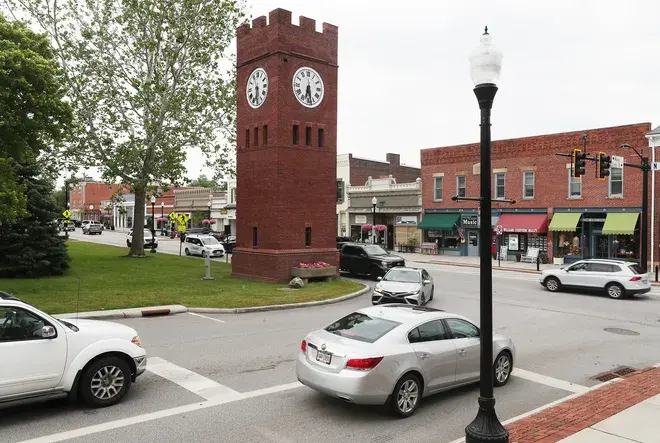
Looking at the rental market, Hudson, while a city with a predominantly owner-occupied buyer base, continues to see steady rental demand, especially in areas close to schools, business districts, and conveniently located areas.
According to Zillow Rental Manager 2024, the average monthly rent for a single-family home in Hudson is approximately $2,100-$2,400, which is slightly higher than the Ohio average (approximately $1,500-$1,800). This somewhat reflects the housing needs of middle and upper-income people.
However, due to the limited overall supply of properties, it is usually not difficult for investors to rent out their properties in the short term after purchase. However, it should also be noted that the current vacancy cycle for rental properties in Hudson averages 30-45 days, which is slightly longer than in the Cleveland metro area, suggesting that tenants are demanding a higher level of housing.
If stabilizing cash flow is the goal, you need to carefully evaluate the gap between the cost of acquisition and the expected rent to avoid compromising your returns due to excessive holding costs.
Interest Rate Environment and Long-Term Holding Costs
Currently, 30-year fixed mortgage rates in the United States are around 6.8-6.9 percent, while 15-year rates are 5.8-5.9 percent. Although they have fallen slightly from the beginning of the year, they are still well above the low levels seen during the epidemic. The Federal Reserve’s federal funds rate remained in the 4.25%-4.50% range, and the overall interest rate environment remains high in the near term.
Historically, periods of high interest rates are usually accompanied by higher mortgage costs, which in turn suppresses borrowing demand and market activity. However, for investors, there may also be a trend towards a pick-up in rental demand and relatively firm rental levels.
For first-time buyers or investors planning to leverage their loans, the current interest rate environment certainly poses a number of challenges.
The first is the increased pressure on monthly payments. Compared to low interest rates of around 3% during the epidemic, rates on 30-year loans have now risen to nearly 7%, and monthly payment expenses have increased significantly as a result, often by several hundred dollars more per month. This has compressed the scope for investment returns and added cash flow pressure on investors who rely heavily on capital leverage.
Second, banks have stricter loan approval standards. Most institutions now require a down payment of at least 20% or even 25% and are more meticulous in reviewing documents such as proof of income and credit scores.
In addition, the overall cost of ownership has risen from a long-term perspective. Higher interest rates mean significantly higher total interest payments throughout the repayment cycle. If you are investing with the goal of holding for the long term, you will need to reassess the overall return model.
It is worth noting, however, that it is still possible to achieve stable returns through sound planning, such as utilizing tax credits and controlling holding costs, combined with the long-term appreciation potential of the property.
Is Now the Time to Get?

After learning about market trends, listings, and financing costs, many people ask: Is it the right time to buy in Hudson? There’s no standard answer to this question. The key lies in the fact that the purpose of your home purchase is different, and so are your priorities.
For owner-occupied buyers, short-term fluctuations in home prices are certainly worth noting, but quality of life, commuting convenience, and school district resources are often the only things that determine whether or not it’s a good time to enter the market.
If you are looking for a long-term home, the current prices are not low, but the market as a whole is not overheated, so there is still room to choose the right property. Rather than waiting for the so-called “best time”, a more realistic approach may be to find a property that matches the conditions according to their own budgets and needs, so as not to miss the right opportunity by waiting too long.
For investors, the considerations are a bit more complex, as home price growth in Hudson has leveled off, but rents have stabilized and vacancy rates are low, all of which provide support for investors seeking cash flow.
However, with current high interest rates, there is more pressure to hold in the short term, making it more suited to a solid strategy that aims to preserve value and rental income over the medium to long term.
If you are more interested in the returns from property appreciation, then you need to make a more detailed assessment in conjunction with the specific location, development plan, and regional potential.
Related articles