In recent years, the Australian real estate market has attracted widespread attention from global investors with its stable economic environment, strong population growth and high-quality living conditions. Whether you are planning to immigrate, preparing for your children to study abroad, or simply seeking to preserve and increase the value of your assets, Australian real estate is undoubtedly an investment area worthy of in-depth research.
1. Why choose to invest in Australian real estate?
- Stable political and legal system
Australia is a society ruled by law, with clear property rights, transparent policies and judicial independence, providing extremely high protection for foreign investors.
- The growing population
The population in major Australian cities such as Sydney, Melbourne and Brisbane continues to grow, driving long-term demand for housing and is an important factor in real estate appreciation.
- Education and immigration attraction
High-quality educational resources and stable immigration policies make Australia a popular choice for Chinese study abroad and immigrate, further driving investment demand.
- Property tax and inheritance tax policy advantages
Australia does not have a “property holding tax” (Land tax only, and the first home can be exempted in most states). At the same time, most states do not impose inheritance taxes, which is friendly to long-term investors.
2. What kind of real estate can foreigners invest in Australia?
According to the Australian Foreign Investment Review Board (FIRB), foreigners can only purchase:
- New residential or off-the-plan projects – New buildings that developers have just launched, new apartments and villas that have never been used, and projects that have not yet been completed.
- Vacant land – with a commitment to build housing in a certain period of time
Foreigners are prohibited from purchasing second-hand houses in Australia, except in special circumstances such as international students buying for personal occupancy. Therefore, for most overseas investors, new homes and pre-sale properties are the main options.
3. Overview of popular cities for real estate investment in Australia
Sydney
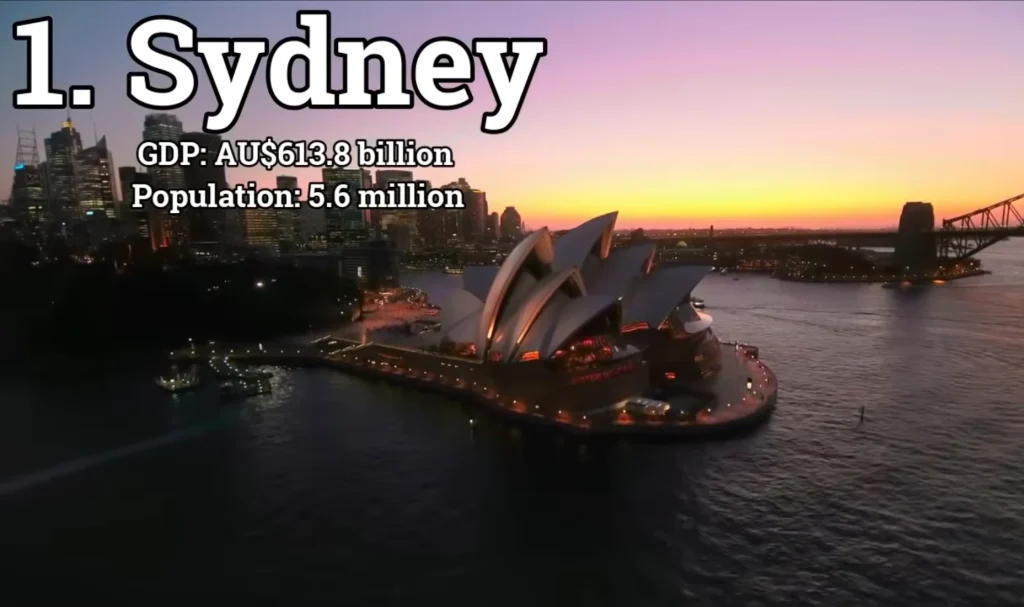
- Australia’s largest city, with a population of 5.6 million and a GDP of AUD 613.8 billion, concentrates abundant educational resources.
- Both the University of Sydney (ranked 18th) and the University of New South Wales (ranked 19th) are featured in the QS World University Rankings.
- Property prices in the city are high, but rental yields are relatively modest. We have listed 10 suburbs that offer higher rental returns — primarily in the apartment market.
| Rank | Suburb | Median Price (AUD) | Avg Weekly Rent (AUD) | Gross Rental Yield (%) | Vacancy Rate (%) |
| 1 | Carramar | 401,034 | 389 | 5.16 | 0.8 |
| 2 | Cabramatta | 432,483 | 391 | 4.67 | 0.3 |
| 3 | Canley Vale | 439,313 | 402 | 4.72 | – |
| 4 | Berkeley Vale | 379,669 | 410 | 5.63 | 1.4 |
| 5 | Fairfield | 396,190 | 420 | 5.54 | 0.3 |
| 6 | Lethbridge Park | 452,742 | 424 | 4.98 | – |
| 7 | Jamisontown | 462,139 | 429 | 4.66 | 0.8 |
| 8 | Wyong | 483,430 | 430 | 4.91 | 2.9 |
| 9 | Warwick Farm | 409,386 | 434 | 5.72 | 1.0 |
| 10 | Cranebrook | 658,165 | 437 | 3.5 | 2.0 |
Melbourne
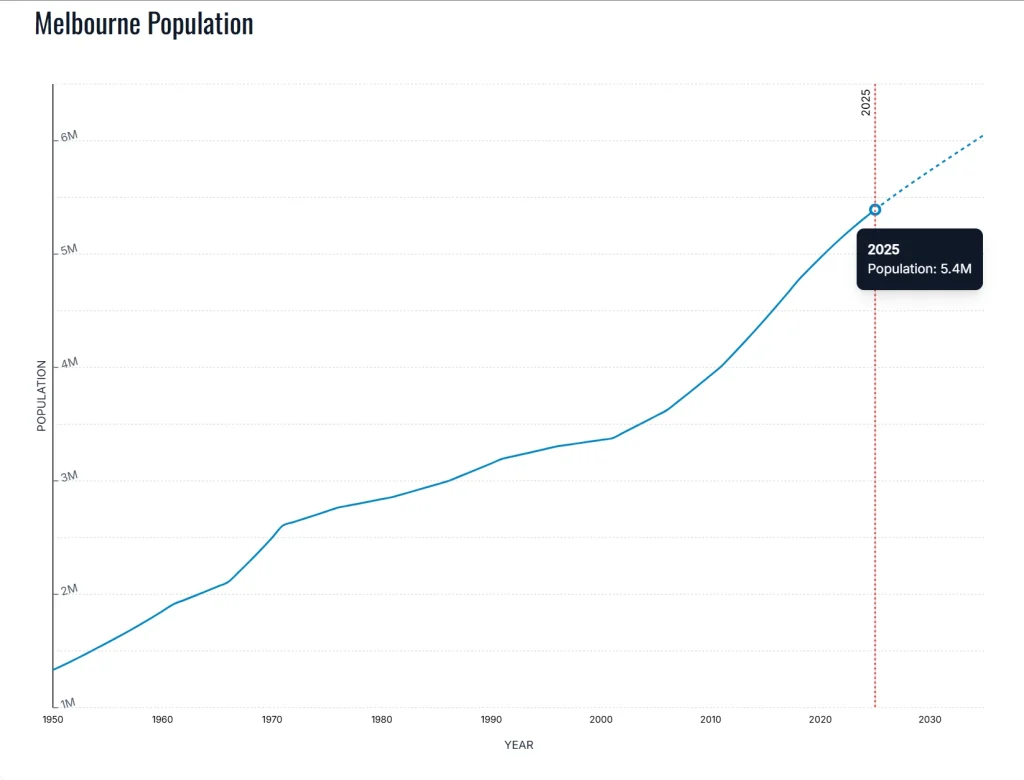
- A capital of culture and education, it has the fastest population growth rate (1.44% YoY) in Australia.
- With a population of 5.4 million and a GDP of AUD 491.4 billion.
- Both the University of Melbourne (ranked 13th) and the Monash University (ranked 37th) are featured in the QS World University Rankings.
Brisbane
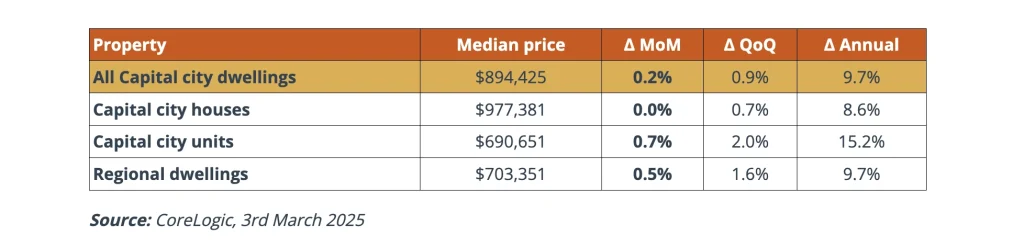
- In recent years, property price of Brisbane have shown a trend of approaching those in Sydney, with high rental yields. After securing the bid to host the 2032 Olympic Games, the city has attracted increased attention from investors.
- With a population of 2.8 million and a GDP of AUD 272.9 billion.
Weekly rents and growth in the three largest cities
| City | Weekly Rent(AUD) | Annual Growth | Vacancy Rate |
| Sydney | $775 | +3.35% | 0.9% |
| Melbourne | $580 | +1.8% | 1.2% |
| Brisbane | $650 | +4.8% | 0.8% |
4. The process of buying a house in Australia
- Select projects: Learn about investable projects through agents or developers;
- Pay a deposit: usually 10% of the room rate, and sign a reservation agreement;
- FIRB application: Foreign buyers must apply for permission from the Foreign Investment Review Board;
- Signing the contract: Officially sign the purchase agreement after obtaining FIRB approval.
- Final payment: Pay the remaining balance and complete the delivery. for properties under construction, wait until completion;
- Transfer registration: The property registration is completed with the assistance of a lawyer.
5. What are the costs of buying a house in Australia?
| Fee Type | Amount or Percentage | Description |
| Property Deposit | Typically 10% | Secures the property after payment |
| FIRB Application Fee | From approximately AUD 6,350 | Increases progressively based on property value |
| Stamp Duty | Around 4%–5.5% (varies by state) | Additional surcharge for foreign buyers (8% in NSW, 7% in VIC) |
| Legal Fees | AUD 2,000–3,000 | Covers contract review and settlement services |
| Loan-Related Fees | Depends on the bank | Includes valuation fees, application fees, and other bank-related charges |
6. Introduction to loan policy
Most Australian banks allow foreign investors to apply for loans, subject to the following conditions:
- The down payment ratio generally needs to reach 30%-40%.
- The maximum loan period is 25-30 years.
- The bank will ask for proof of overseas income or assets.
The loan interest rate has fluctuated between 5% and 7% in recent years. For example:
- Temporary residents (skilled and investment immigrant categories): starting from 5.63%
- Student and graduate visas: starting from 6.19%
- Pure overseas people (no Australian visa): starting from7.24%
7. FAQ
Q1: Can I obtain Australian citizenship by buying a house?
Simply buying a house cannot obtain immigration status, but investment-type immigration visas (such as category 188) may require real estate as proof of source of funds.
Q2: Can overseas buyers resell Australian properties?
Yes, but if it is a pre-sale property, it must be completed and the property must be transferred before resale. Capital gains tax (CGT) is also payable, and 12.5% of the house price must be withheld when selling the house. After the actual CGT is calculated, you can apply for a refund of the difference.
Q3: How much stamp duty do foreigners need to pay when buying a house in Australia?
Includes Standard Stamp Duty and Foreign Purchaser Surcharge Duty, about 12.5%–13.5% in Sydney and about 12% in Melbourne.
Related Reading