When people talk about Chicago real estate, the conversation often centers around two pressing issues: one of the highest property tax rates in the nation and concerning crime rates in certain areas. However, as the third-largest city in the United States, Chicago real estate is far from fading due to these challenges. It still boasts numerous vibrant, safe, and highly investment-worthy neighborhoods.
1. Current Situation of the Chicago Real Estate Market
In recent years, Chicago’s real estate market has remained generally stable with modest growth. According to the latest data from Redfin, the median home price in September 2025 was $370,000, representing a year-on-year increase of 3.1%.
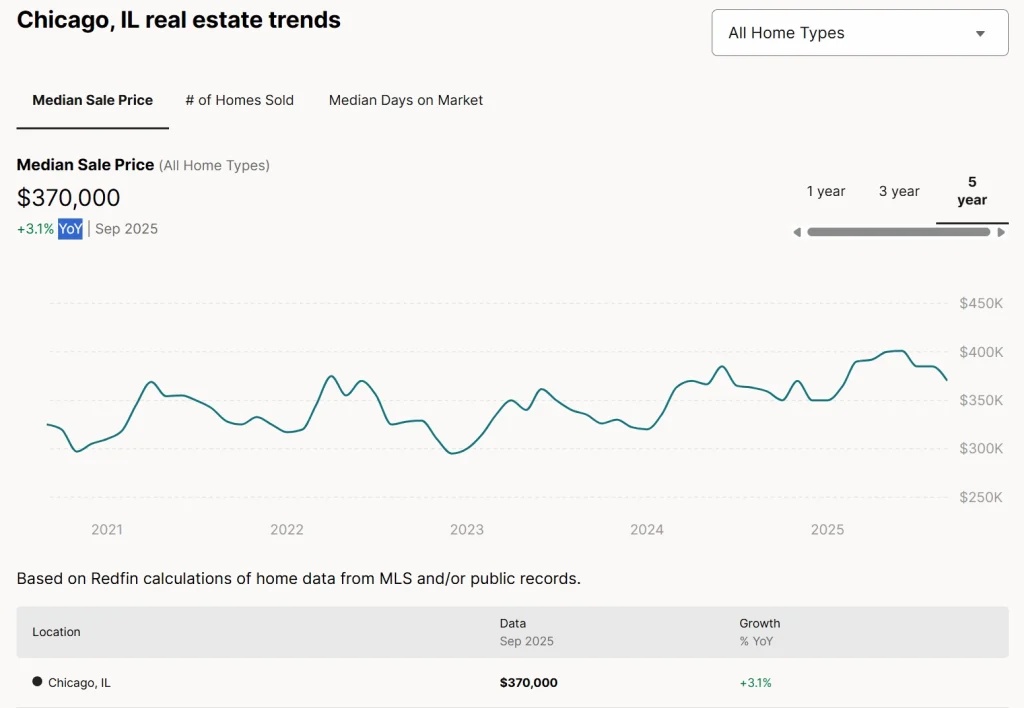
Key factors contributing to the Chicago real estate market include:
1) Diversified job market
Chicago is not only one of the financial centers of the United States, but also a major center for law, medicine, marketing, and manufacturing. It is home to the headquarters of numerous Fortune 500 companies (such as Boeing, United Airlines, McDonald’s, and Abbott), which continuously attracts talent.
2) The rise of the tech industry
In recent years, Chicago has emerged as a rapidly growing tech hub in the Midwest. Tech giants such as Google and Meta have established large offices in areas like West Loop, while numerous startups have flourished. This has attracted a wave of young, high-income tech professionals.
3) Domestic and international migration
Chicago has long been an important international gateway, attracting immigrants and international students worldwide. At the same time, many people from other states are relocating here, particularly families drawn by its job opportunities and excellent educational resources.
4) World-class urban facilities
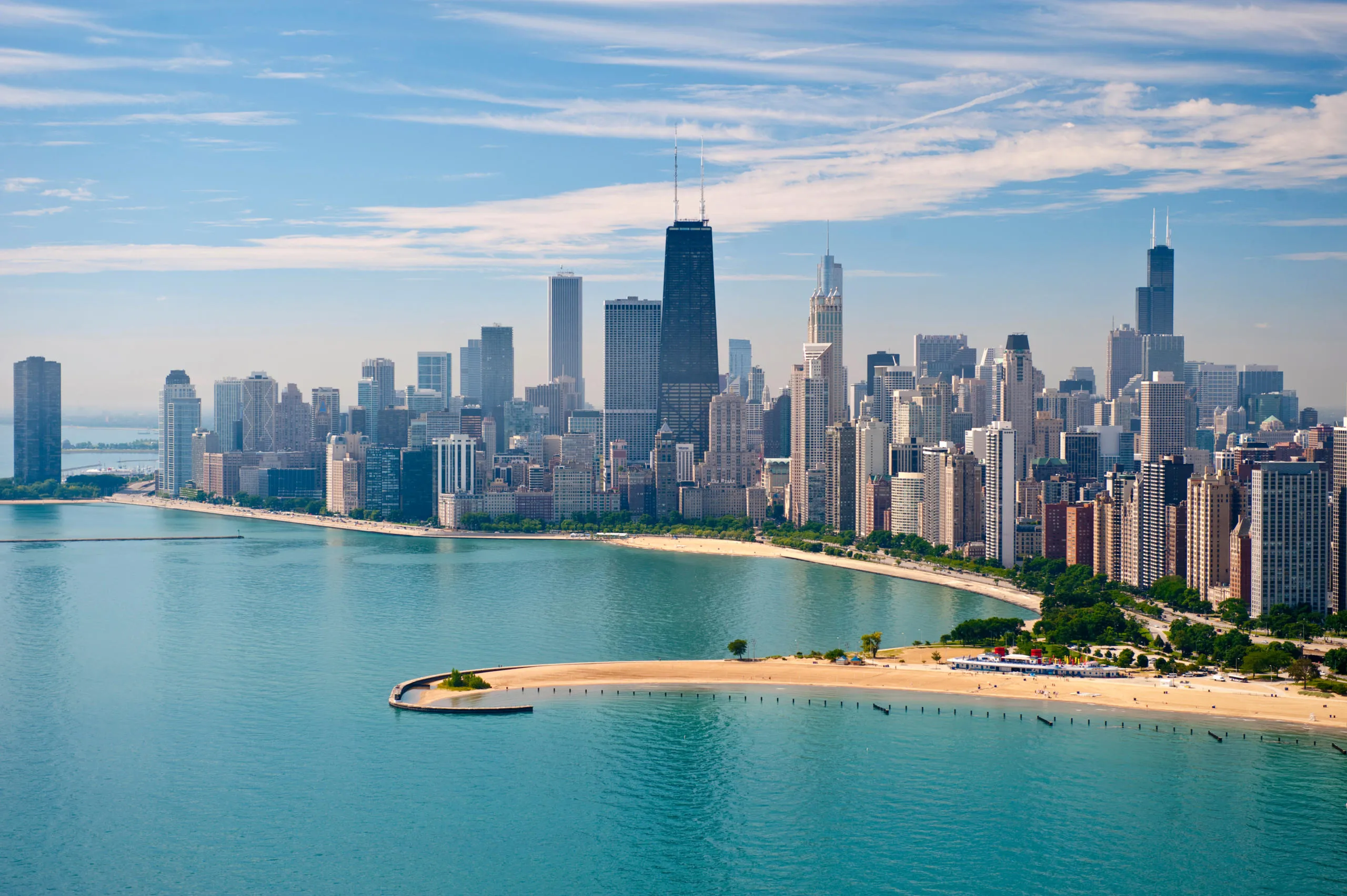
Chicago offers an unparalleled lakefront and park system, top-notch museums, theaters, restaurants, and professional sports teams. Among them, Lincoln Park (well-balanced living), Lakeview (ultimate lakeside and park lifestyle), and West Loop (vibrant dining, trend, and innovation scene) stand out as top choices.
In summary, the Chicago real estate market is driven by a “combined force”: its strong economic foundation and urban charm.
2. Two major challenges for Chicago real estate
1) High Property Taxes
Cook County, where Chicago is located, is known for having one of the highest property taxes in the U.S. Its median property tax rate is approximately 2% to 2.3%, significantly higher than the national average of 1%.
For example, a home worth $370,000 would cost about $6,800 in annual property taxes.
2) Crime Concerns
Chicago’s crime rate has long been higher than the national average, especially the murder rate, which has reached an astonishing 3-4 times. However, the majority of crimes are concentrated in certain neighborhoods on the South and West sides.
Although property prices in areas such as South Side, West Garfield Park, and Englewood are low, the risks are high, making them generally unsuitable for purchase.
3. The most worthwhile areas to buy
| Region | Features | Median House Price | Annual Property Taxes (assessed) |
| Lincoln Park | An upscale residential area near Lake Michigan, with top-rated schools, green spaces, and parks. It offers convenient living and a safe community. | $732,500 | $15,750 |
| Lakeview | There are abundant dining, shopping and entertainment facilities; convenient transportation, with a well-developed subway and bus network; the community is active and safe. | $520,000 | $11,180 |
| West Loop | An emerging high-end apartment complex with a concentration of commercial and technology companies; abundant art and creative spaces; and a vibrant rental market. | $540,000 | $11,610 |
| Logan Square | The community has a strong artistic atmosphere, with many cafes and cultural and creative shops; although there are minor property crimes, public security is improving rapidly. | $616,250 | $13,250 |
| Edison Park | Located near the suburbs, the area is quiet and safe, with good school resources and well-maintained green spaces and recreational facilities. | $497,500 | $10,696 |
| Hyde Park | Home to the University of Chicago with rich cultural heritage; a diverse community with convenient transportation and relatively low property prices. | $293,000 | $6,300 |
These neighborhoods share three key characteristics: good safety, convenient transportation, and well-developed community resources. Whether for living or investing, they offer a high degree of stability.
4. Action Guide for Homebuyers
- Accurate budgeting: In addition to the down payment and mortgage, be sure to include the annual property tax of 2% to 2.3% in your long-term ownership costs. This will help you avoid future impacts on your financial stability and quality of life.
- In-depth on-site research: Only by truly experiencing daily life in the community can you make an accurate assessment of the area. In a city as unique as Chicago, never make decisions based solely on information you find online.
- Consult a local expert: An experienced local real estate agent who is familiar with the nuances of each neighborhood is invaluable.
- Assess property resilience: Prioritize homes with well-designed flood drainage systems, good insulation, and sturdy roofs to withstand Chicago’s extreme weather challenges.
- Focus on long-term value: Choose areas with a growing presence of emerging industries, stable infrastructure, and strong educational resources. These are the fundamental factors that drive property appreciation. If a neighborhood meets these conditions, its future growth is almost guaranteed.
Conclusion
There is no perfect city—every place has its challenges. The key to success lies in your ability to navigate those problems and find the perfect answers within them. Buying a home in Chicago in 2025 is not a blind gamble. What you need is thorough research and precise analysis to ensure you find a community that is truly safe and thriving. Despite its problems, Chicago, as a world-class metropolis, still offers you ideal choices.
Related Reading