In recent years, China’s real estate industry has experienced unprecedented turmoil. From Evergrande’s debt default to Country Garden’s liquidity crisis and the nationwide decline in housing prices, this crisis has not only impacted China’s economy but also attracted widespread attention from global investors.
1. The Background of China’s real estate crisis
- Importance of real estate to China’s economy
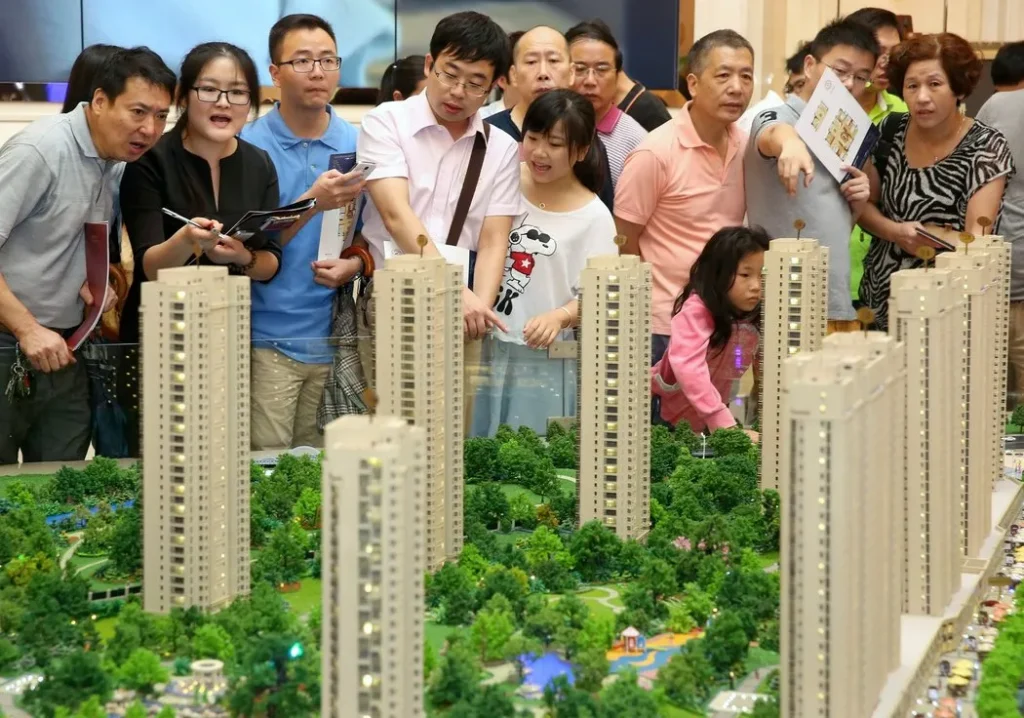
The real estate industry has long been one of the core drivers of China’s economic growth. In the past 20 years, it has directly accounted for 7.34% to China’s GDP. Moreover, by driving various upstream and downstream industries—such as steel, cement, home appliances, and interior decoration—it has indirectly contributed an additional 9.9% to GDP. In total, the sector’s overall contribution to GDP is approximately 17%.
In 2020, the added value of China’s real estate industry reached a historical high of 7.5 trillion yuan, or about 1 trillion US dollars. If viewed as an economy, China’s real estate industry is roughly equivalent to the national GDP of Mexico or Indonesia, ranking around 15th in the world.
Not only does real estate account for a large share of the economy, but it has also played an important role in driving economic growth. Between 2000 and 2020, the real estate industry’s contribution to GDP growth increased from 4.8% to 13.9%. In other words, roughly one-seventh of China’s economic growth during this period was driven by the real estate sector.
In addition, local governments heavily rely on land transfer fees as a source of fiscal revenue, with the proportion of land-related income exceeding 50% in some cities.
- Hidden dangers of the high-leverage expansion model
Over the past 20 years, China’s real estate developers have generally adopted a “high debt, high turnover” development model, relying on pre-sales and bank loans for rapid expansion. However, this model has revealed huge risks amid tighter regulations and a market downturn, leading many real estate developers into debt crises.
2. Direct causes of the crisis
“Three Red Lines” Policy
In August 2020, Chinese regulators introduced the “three red lines” policy to limit the debt levels of real estate companies:
- Debt-to-asset ratio after deducting advance payments ≤ 70%
- Net debt ratio ≤ 100%
- Cash-to-short-term debt ratio ≥ 1
The policy aims to reduce financial risks, but it has led to financing restrictions for many real estate companies (such as Evergrande, Sunac, and Shimao) , triggering liquidity crises.
Declining confidence among homebuyers
Due to the slowing economic growth, rising unemployment rate and the problem of unfinished buildings—Evergrande alone has over a thousand such stalled projects—has caused strong buyer hesitation, leading to a sharp decline in new home sales.
According to data from China’s National Bureau of Statistics, in 2023, the sales area of commercial housing was 1,117.35 million square meters, down 8.5% from the previous year, and the sales volume of commercial housing was 11,662.2 billion yuan, down 6.5% year-on-year. Compared to 2020, housing prices in first-tier cities rose by around 10% in 2023, while second-tier cities saw a slight decline of 1.4%, and third-tier cities experienced a 4.3% drop.
Local government financial pressure
The cooling of the land market has led to a sharp decline in land transfer revenues for local governments. In some cities, this has even resulted in salary cuts for government employees and the suspension of infrastructure projects, further dragging down the economy.
3. The latest real estate market situation (2024-2025)
- Policy relaxation, but limited effect
Relaxation of purchase restrictions: Nearly all cities have cancelled or relaxed restrictions on home purchases to varying degrees.
Reduce down payment ratio & mortgage interest rate: On May 17, 2024, the People’s Bank of China and the State Administration of Financial Supervision and Administration jointly issued a notice to reduce the minimum down payment ratios for first and second home loans to no less than 15% and 25% respectively. Starting from May 20, 2025, the People’s Bank of China authorized the National Interbank Funding Center to publish the Loan Prime Rates (LPR) as follows: 3.0% for the one-year LPR and 3.5% for loans over five years, down by 1.25 percentage points from the 2019 peak.
The “Guaranteed Delivery of Housing” policy aims to ensure that pre-sold commercial housing is delivered to homebuyers on time and with the promised quality. To support this, the government has established special funds to resume construction on unfinished projects, though progress has been slow.
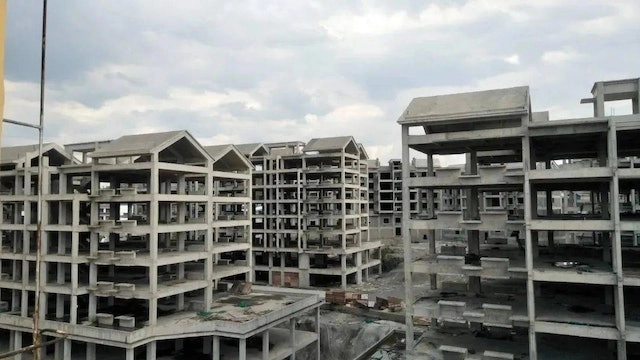
However, the market has not yet recovered significantly and homebuyers remain cautious.
- Debt restructuring of property developers
On August 18, 2023, China Evergrande Group filed for bankruptcy protection in New York and is currently undergoing debt restructuring.
Country Garden defaulted for the first time in 2023. The company is currently actively advancing debt restructuring, reducing losses, and ensuring housing delivery, laying the foundation for a return to normal operations. In 2024, Country Garden reduced its losses, with net losses narrowing by 82.5% year-on-year compared to 2023. The company also delivered 380,000 housing units in 2024, maintaining a leading position in the industry.
Vanke experienced a year-on-year decline in sales performance and reported a net loss, while also facing significant debt repayment pressure.
The above real estate companies were among the top three in China before 2022, but now they are facing difficulties to varying degrees.
- House price differentiation is getting worse
First-tier cities: Housing prices in core areas are relatively stable, but are falling in suburban areas.
Second- and third-tier cities: There is a large inventory, housing prices continue to fall, and a wave of low-price selling has occurred in some cities.
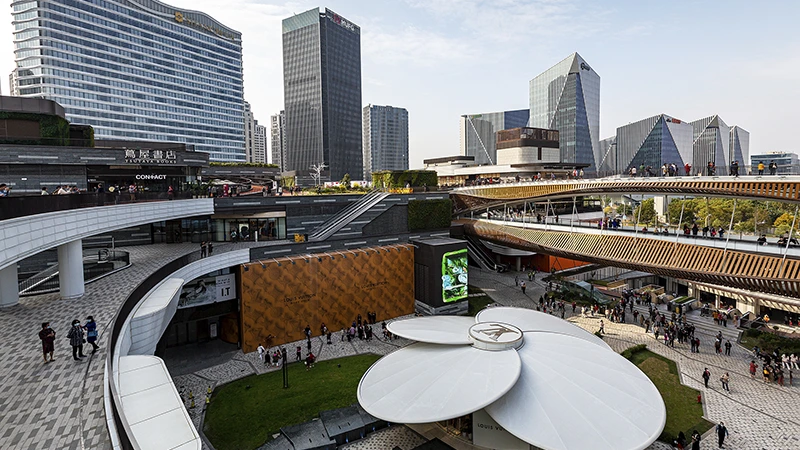
Weak rental market: rising vacancy rates and declining rental yields. According to data from Colliers International, even in Shanghai—the most developed city—the citywide Grade A office vacancy rate reached 19.6% in Q4 2024, with rental prices down 1.2% quarter-on-quarter.
4. Impact on the economy and financial markets
- Dragging GDP growth
The decline in real estate investment directly affects the construction and building materials industries, and reduces the investment capacity of local governments. It is estimated that China’s GDP growth rate may remain at 4.5% (lower than historical levels) in 2024-2025.
- Bank bad debt risk increases
Loan defaults among property developers are increasing, putting pressure on some small and medium-sized banks.
The rate of individual mortgage defaults is rising, but the overall risk remains controllable. This is largely due to the relatively high savings rate among Chinese citizens and the likelihood that the government will take all necessary measures to support the market and prevent a more severe crisis.
- Foreign capital withdrawal and market volatility
International investors remain cautious about China’s real estate bonds and equities, with some capital shifting toward emerging markets (such as Southeast Asia and Latin America) and developed economies (including the United States, Europe, and Japan).
The valuations of mainland real estate developers listed on the Hong Kong stock market have shrunk significantly, such as Longfor and China Resources Land.
5. Investors’ response strategies
- Short term: adopt a wait-and-see approach and avoid bottom-fishing.
There is a risk of default in real estate company stocks and high-yield bonds, so it is not advisable to buy at the bottom blindly.
Pay attention to policy trends, especially first-tier cities’ policies on purchase restrictions, mortgages, etc.
- Medium to long term: focus on structural opportunities.
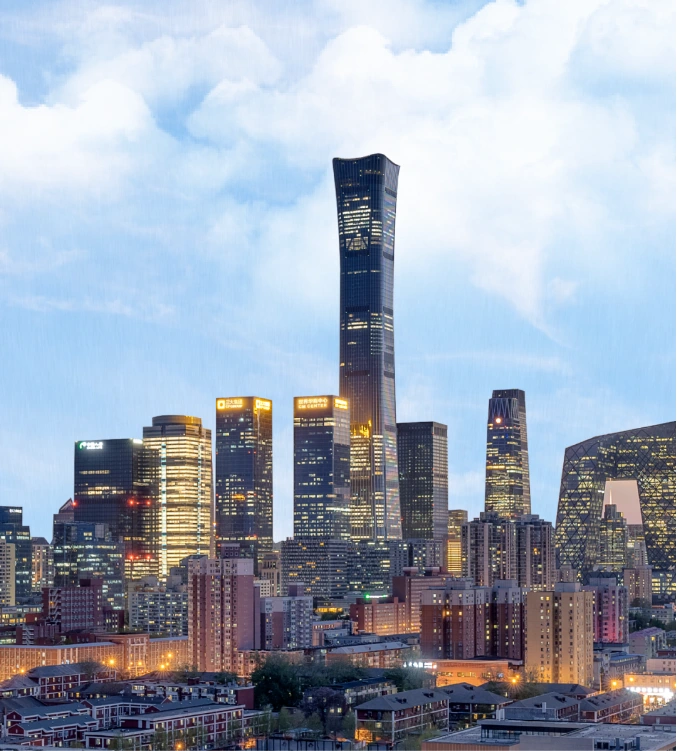
High-quality assets in core cities: Properties such as office buildings and long-term rental apartments in cities like Beijing and Shanghai still possess long-term value.
Affordable housing & urban renewal: Policies are encouraging the development of affordable housing, and related enterprises may benefit.
- Overseas asset allocation
Temporarily turn to overseas markets to diversify risks.
US dollar assets can be used as a hedging tool.
6. Conclusion: When will the crisis end?
At present, China’s real estate sector is still in the phase of “deleveraging and deflating the bubble.” Whether the crisis has truly ended may not be confirmed until 2026. Key observation indicators include:
- Are new home prices and sales stable?
- Are real estate companies operating in a healthy and stable manner?
- Are China’s various industries recovering?
In the long run, China’s real estate market is unlikely to collapse, but its “golden era” is over, and the future trend remains uncertain.
Related Reading