In the wake of market volatility and interest rate changes, the real estate heat has cooled in many cities. But Seattle real estate is still on many investors’ long-term watch lists. Not because of its reputation, but because it does have some solid fundamentals: demographics, employment opportunities, and supply and demand are all relatively healthy.
Seattle is not the “next stop” for those looking for a solid investment on the West Coast, but rather a time-tested option. Next, we’ll analyze what makes Seattle real estate attractive over the long term for a number of reasons.
Strong Regional Economy Supports Real Estate Values
The steady performance of Seattle real estate is not driven by market sentiment but is built on the fundamentals of the local economy. The city’s industrial structure, employment, and income levels affect residents’ ability to purchase homes and the carrying capacity of the market. You must understand these economic contexts before analyzing the value of your investment to determine if Seattle real estate is worth holding for the long term.
Clustering of Science and Technology Industries, Driving High-Paying Employment
Seattle is most notably characterized by a high concentration of tech industries. Examples include Microsoft, which is headquartered in Redmond on the east side of the city, and Amazon, which has multiple office parks downtown. These two companies represent the global tech industry and have also long offered a large number of high-paying local jobs. In addition to these two major corporations, companies such as Meta, Google, and Salesforce also have branches or research and development centers in Seattle, allowing for the continued expansion of tech-related jobs.
The hiring needs of these companies are usually focused on technical positions such as software development, data engineering, and product management, with relatively high pay scales. Many employees earn more than $100,000 per year. With stable loan qualifications and the ability to purchase homes, they are among the most active groups of buyers and renters in the Seattle real estate market.
Demand for housing is chronically tight in areas such as South Lake Union and Belltown, which are close to technology parks. This high-income group drives the volume of mid- to high-end homes. They have a steady demand for the rental market, which favors investors for consistent rental returns.
From homebuyers to renters, the high-tech sector provides Seattle with a structurally solid, affordable demographic base. This is one of the reasons why Seattle’s core area real estate has remained strongly supported even during the market correction.
Continued Population Inflows and Strong Demand for Housing
When determining whether a city’s real estate market has long-term potential, you need to look at population movement. Much of what has kept Seattle’s housing market active in recent years has to do with its continued positive population inflow.
According to the U.S. Census Bureau, the Seattle metro area’s population has grown at an average annual rate of more than 1 percent over the past decade, with in-migrants coming primarily from California, Texas, and other areas with a higher cost of living. High housing prices, stressful living conditions and the trend toward telecommuting have prompted some high-income earners to choose to move out of San Francisco or Los Angeles and settle in Seattle instead. This segment of the population typically has greater home-buying power and tends to stay in the city for longer periods of time, as well as driving continued demand for mid- to high-end housing.
In addition to the appeal of the tech sector, Seattle’s university resources (e.g., the University of Washington), healthcare system, and urban infrastructure are attracting young families and professionals to move to the city. This demographic is demanding school districts, transportation, and living environments, driving housing demand growth in several Seattle metro areas. For example, Greenwood, Rainier Valley, and West Seattle have seen steady increases in transaction volume and rent levels.
Structural Balance of Real Estate Supply and Demand
Seattle’s geography limits the amount of land that can be developed, and city planning has more stringent requirements for new construction. These factors have limited growth in the supply of new homes. However, with the continued influx of population due to the growth of technology and other industries, the demand for homeownership and rentals is stable and even trending slightly upward. Next, we will specifically analyze the impact of this supply and demand on the Seattle real estate market.
Limited Land Supply, Scarcity Supports Prices
When it comes to the trend of home prices, many people’s first reaction is to look at changes in demand . But in Seattle, the availability of land itself dictates that prices won’t go down easily.
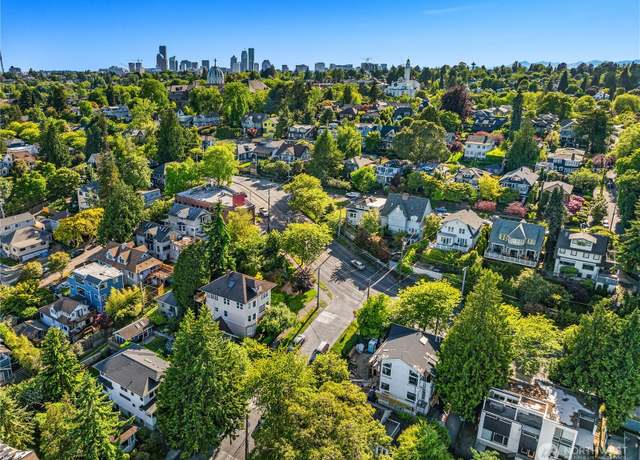
Seattle’s city boundaries are not as generous as some inland cities. With Puget Sound to the west and Lake Washington to the east, plus north-south transportation arteries and conservation districts, there’s not a lot of land that’s really suitable for development. Moreover, Seattle’s urban planning emphasizes low-density residential preservation and environmental protection, with a high threshold for approval of high-rise condominiums, and some neighborhoods are even reticent about new development. These factors have combined to keep the city’s pace of adding new housing relatively slow.
Take South Lake Union and Capitol Hill, for example. While market demand is strong, development sites are nearly full with earlier projects, and it’s not easy to find suitable new parcels. Even when land is available, it can face a lengthy permitting process and resistance from community opposition. This creates a problem: not only are there fewer housing units in the city center and conveniently located areas, but they are also slow to be updated, keeping the supply short of demand for a long time.
For homebuyers, prices will not fall easily; for investors, owning a property in a prime location with a tight land supply is a sign of asset stability.
Double Strength in the Rental and Sales Market
In Seattle, housing is both a consumer good and a liquid asset.
Not all homebuyers are looking for a return on their investment. Many buyers choose to purchase a home because of family stability, career planning, or educational needs. These buyers will stay in their homes for a long time and will not sell them easily, which keeps the inventory relatively stable and the pace of circulation from getting out of control.
The types of tenants in different areas of Seattle vary, from contract workers and project-based employees to young people who are watching the market and haven’t yet decided whether to settle down. Landlords have some initiative in tenant selection, and terms such as lease length and payment options are better negotiated. This balance gives investors two paths to choose from: one is to rely on rental returns for cash flow, and the other is to wait for the right time in the market before switching to selling, with a flexible exit.
The two-way health of the rental and sale market is reflected not just in the rate of return or rental increase; there is also the fact that the property has actual use value and both buyers and sellers are in a relatively rational state. For investors, this structure provides more controllability rather than relying on market sentiment or favorable policies.
Nice Infrastructure and Livability
A city’s accessibility to transportation, public services, and amenities affects residents’ quality of life and the city’s attractiveness. In recent years, Seattle has invested significant resources in upgrading its transportation network, building public facilities, and improving the community environment. These physical changes have also provided solid support for real estate values. Below, we explore these specific infrastructure and livability enhancements in detail.
Public Transportation and Urban Renewal Project Promotion

Seattle has made a major effort in recent years to expand its light rail system, specifically the Link Light Rail’s Blue and Red lines to the far suburbs, including Lynnwood, Bellevue, and Redmond. These lines connect downtown to employment and living areas, shortening commute times for residents. The average commute time from Redmond to downtown, for example, has been reduced to about 40 minutes by light rail, down from more than an hour previously.
The South Lake Union area was once heavily industrialized. With the arrival of Amazon’s headquarters, the conversion of former warehouses and factories into high-rise office and residential buildings has introduced a large amount of retail, restaurant and public recreational space. Its urban plan also emphasizes green space with the addition of parks and waterfront trails. Belltown’s renovation was to preserve the historic architectural character while upgrading the infrastructure. Its renovated neighborhoods add pedestrian walkways, street art, and space for community events.
The advancement of these transportation and urban renewal projects has contributed to increased real estate values in the neighborhood. Residences and stores near light rail stations have seen significant increases in occupancy and selling prices because of their accessibility. And the improved neighborhood environment brought about by urban regeneration has driven up demand for properties. For investors, these areas with mature support facilities and easy access to transportation help lock in opportunities for solid long-term asset appreciation.
High Quality of Life

Seattle’s educational resources have attracted many families to settle here. For example, the Bellevue and Redmond school districts rank among the best in the state, with well-rounded curriculums and a wealth of extracurricular activities. And, many other schools can offer AP programs and the International Baccalaureate. Parents will always choose a neighborhood for their children, creating a steady demand for school district housing.
Seattle is home to several leading healthcare organizations. For example, Seattle Children’s Hospital specializes in pediatrics and is the only hospital in the region with a Level III NICU, and the Fred Hutchinson Cancer Research Center is known for its cancer treatment and research. The city has a wealth of medical resources to ensure the health of its residents.
Seattle’s rich and diverse natural environment is another major advantage. Among them, DeScarver Park is over 500 acres with hiking and biking trails and shoreline for fishing and wildlife viewing. Green Lake Park, Lake Washington and Puget Sound…
Overall, Seattle’s high level of education, healthcare, and natural environment provide a great foundation for living and a solid foundation for steady growth in the real estate market.
Related Reading