1. Introduction: The Polarized Shanghai Real Estate Market
In the past two years, the Shanghai real estate market has shown an unprecedented differentiation pattern: Luxury property prices in core areas have been soaring, with some high-end projects seeing increases of over 30%, such as Jinling Huating and Greentown Chaoming Oriental. In contrast, housing prices in the outer suburbs continue to decline, with some developments seeing price drops of over 40%. Projects such as Jinglanwan, Fengfa Xianhui Yuedi, and Fengfa You’an Jingdi in the Xinchang area have experienced zero registrations during the pre-sale phase. This phenomenon reflects changes in the market supply and demand structure.
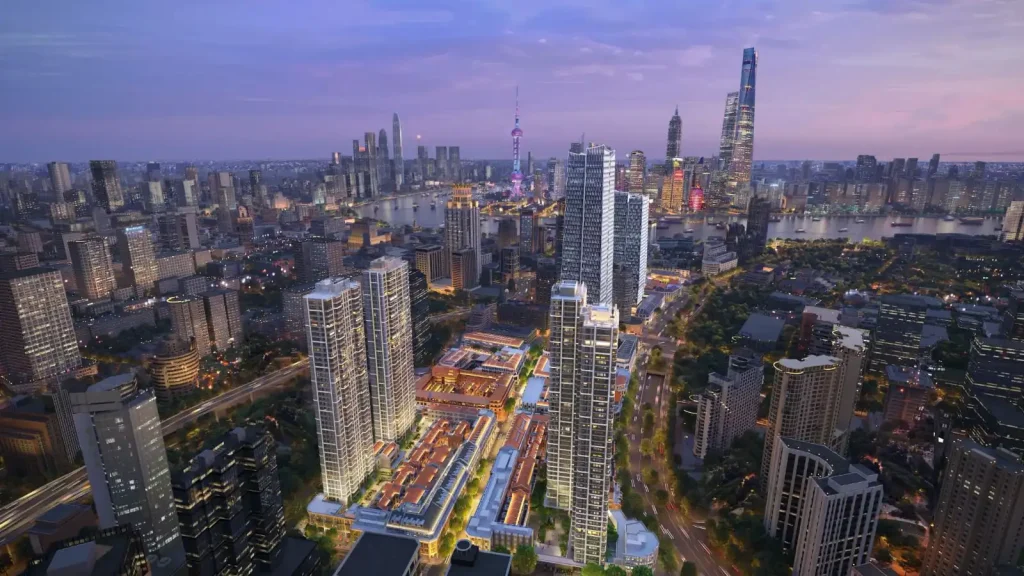
2. Luxury Housing Market: Surge in Both Volume and Price – The Logic Behind the 30% Increase
| Project | District | Units sold | Price per m² | Sales Amount |
| Greentown Chaoming Oriental | Xuhui District | 120 | 195,000 yuan/㎡ | 6.99 billion yuan |
| Jinling Huating | Huangpu District | 158 | 189,000 yuan/㎡ | 9.21 billion yuan |
| One Sino Park, Shanghai | Huangpu District | 169 | 185,000 yuan/㎡ | 10.07 billion yuan |
Overview of Luxury Developments with Price Increases Exceeding 30%
- Asset allocation needs of high net worth individuals
As China’s economic and financial center, Shanghai has attracted a large number of high-net-worth individuals. Against the backdrop of stock market volatility and declining returns on wealth management products, luxury properties have become the preferred safe-haven asset. Especially for scarce housing in core areas such as Huangpu Riverside, Lujiazui, and Xintiandi, prices continue to rise due to limited land resources.
- Policy Easing Boosts Luxury Property Transactions
Since 2023, Shanghai has relaxed restrictions on luxury home purchases, such as easing buying limits for non-local high-end talents and reducing transaction taxes on luxury properties (from 2% to 1%), further stimulating market demand.
- Return of International Capital and Increase in Foreign Buyers
High-level foreign executives and overseas-returned Chinese have become key buyers in the luxury property market, driving prices of some top-tier projects to record highs.
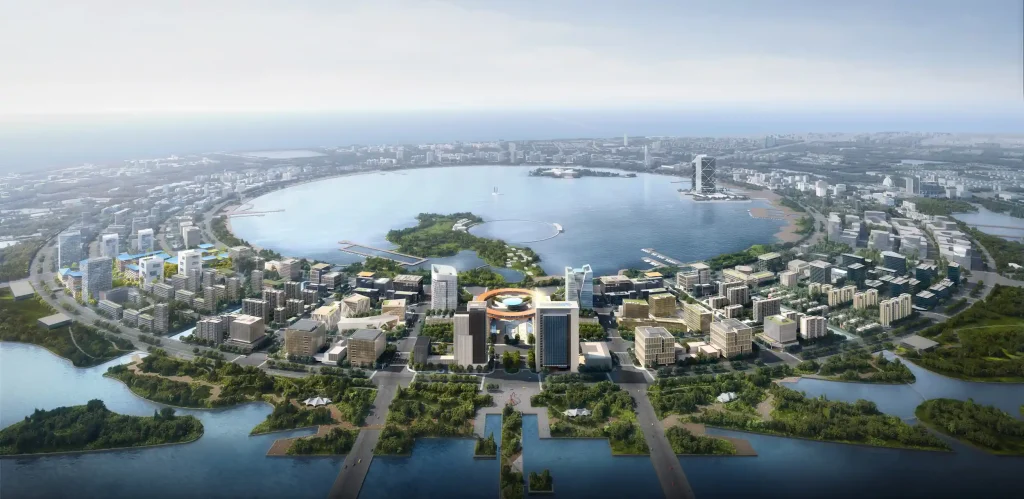
3. Suburban market: Inventory pressure is high and housing prices plummet 40%
| Project | House prices in 2021 | House prices in 2025 | Decline |
| Lujiazui Dripping Water Ripples | 63,000 yuan/㎡ | 39,000 yuan/㎡ | -38.1% |
| Hai Shang Fenghua | 52,000 yuan/㎡ | 30,000 yuan/㎡ | -42.3% |
| Dishui Lake Xinyuan Phase IV | 48,000 yuan/㎡ | 26,000 yuan/㎡ | -45.8% |
| Yihao Jiayuan | 42,000 yuan/㎡ | 18,000 yuan/㎡ | -57.1% |
Overview of Housing Price Changes for Selected Developments in Lingang New Area
- Insufficient First-Time Homebuyer Demand Leading to Weak Sales
In stark contrast to the booming luxury housing market, property prices in Shanghai’s outer suburban areas—such as Fengxian, Jinshan, Chongming, and Lingang—have been continuously declining. Due to the overall economic downturn, income growth for first-time homebuyers has slowed, leading to strong market caution and a significant decline in transaction volume.
- Oversupply of new homes leads developers to cut prices for promotions.
In the past two years, the large supply of land in Shanghai’s suburbs has led to a high inventory of new homes. In order to speed up inventory clearance, developers have to cut prices for promotions and even launch discounts such as “zero down payment” and “free parking space”, but the effect is limited.
- Inadequate supporting facilities and slowing population inflow
Another major reason for the decline in suburban housing prices is the lagging development of supporting facilities. Compared to the city center, the outer suburban areas still have less developed transportation, education, medical, and other resources. Additionally, Shanghai’s population growth has slowed (the permanent resident population was 24.8026 million at the end of 2024, a decrease of 72,000 compared to the previous year), resulting in insufficient support for housing prices.
4. Deeper reasons behind market divergence: economic structural transformation and unequal wealth distribution.
Shanghai’s economic growth is shifting from traditional manufacturing to high-end service industries. High-income groups in sectors such as finance and technology are experiencing rapid wealth accumulation. At the same time, Shanghai’s positioning as a financial center strongly attracts top-tier talent and expatriates. These factors have all contributed to the rising demand for and prices of luxury properties.
Outlying suburban areas are still dominated by traditional industries and manufacturing, with relatively sluggish economic growth. The limited income growth among the average working class in these regions has, in turn, impacted the performance of the local real estate market. This wealth differentiation directly affects the demand structure of the real estate market, and the trends of luxury homes and basic housing are bound to be different.
5. Future Trend Analysis
- The luxury housing market may maintain a high level
As long as Shanghai’s economy remains strong and its appeal to top talent endures, luxury home prices in core areas will not decline. However, if there are policy adjustments (such as raising the transaction tax on luxury homes), the market may experience a slight correction.
- Suburban markets need policy stimulus
If the government introduces more favorable policies for first-time homebuyers—such as lowering down payments and mortgage interest rates, relaxing purchase restrictions, and accelerating infrastructure development in suburban areas—the suburban housing market may gradually stabilize.
- The rental market becomes a new variable
With the advancement of the “rent-and-purchase” housing policy, the supply of government-subsidized rental housing in Shanghai is increasing (200,000 new units planned during the 14th Five-Year Plan period), which may divert some demand from first-time homebuyers and further impact suburban housing prices.
6. Conclusion
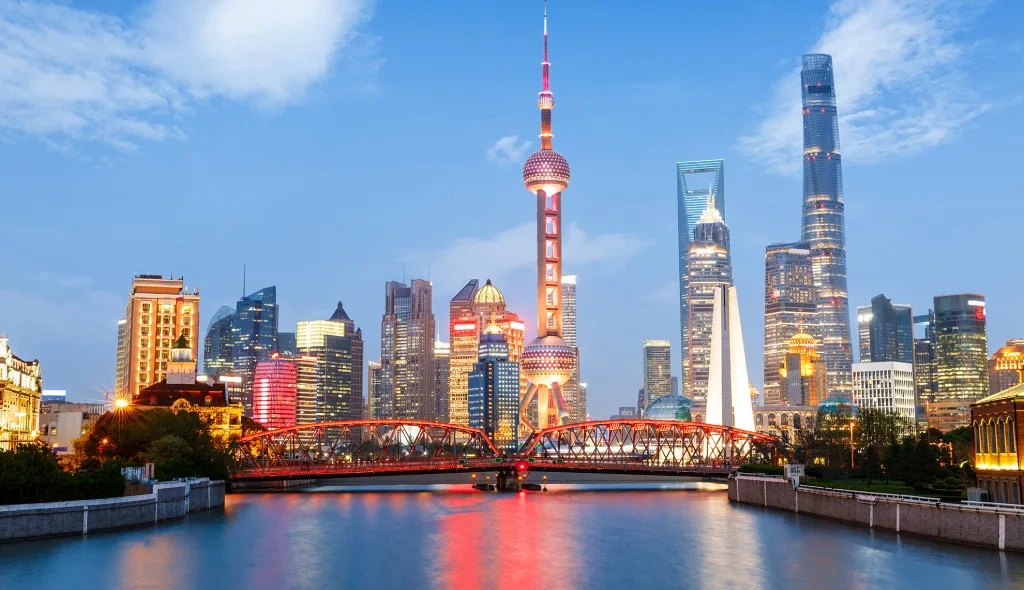
The current Shanghai real estate market is like a microcosm of the economy – the high-end market is booming, while the ordinary market is under pressure. This “K-shaped divergence” not only tests homebuyers’ decision-making but also poses new challenges for policymakers. In the future, how to balance market supply and demand, optimize land supply, and improve the housing security system will become the key to the healthy development of Shanghai’s real estate market.
Related Reading