In recent years, the Spanish real estate market has shown a diversified development trend, featuring seaside villas for high-end vacations as well as urban apartments for investment and personal residence. This article will analyze the market overview, regional differences, investment trends, policy impacts, and future prospects to help investors and homebuyers understand the latest developments in the Spanish real estate market.
1. Market Overview: Recovery and Stability
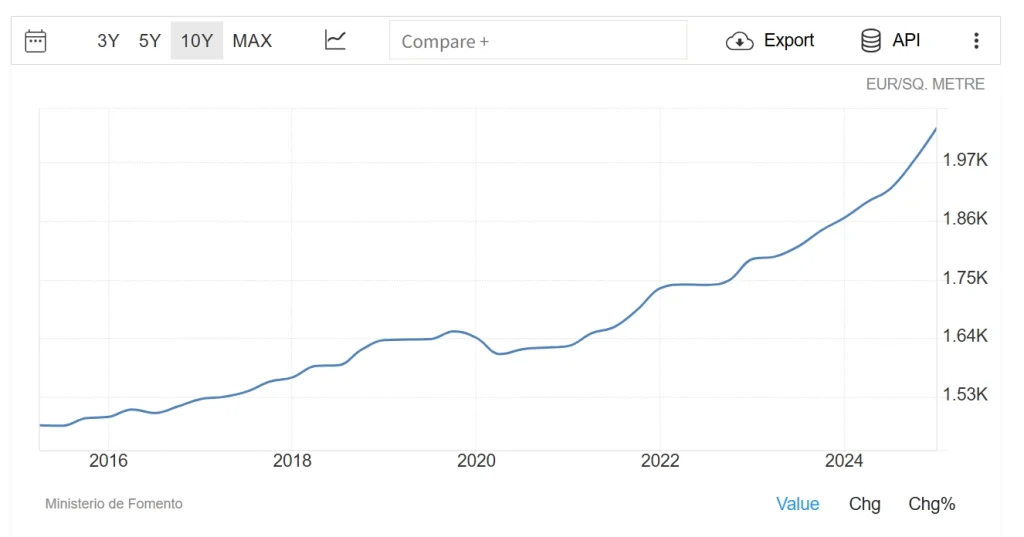
Since 2014, the Spanish real estate market has undergone a prolonged recovery, with property prices steadily rising, especially in Madrid, Barcelona, and coastal resort areas. According to data from the Spanish National Statistics Institute (INE), national house prices increased by 8.5% year-on-year in Q1 2025, and the increase in some popular cities such as Barcelona and Madrid city center even exceeded 10%.
Meanwhile, the rental market remains active. According to Global Property Guide data, the average gross rental yield in Spain stands at 5.60% (Q1, 2025). Tourist hotspots such as Marbella, Ibiza and the Canary Islands offer investors higher rental returns due to strong demand for short-term rentals.
However, it should be noted that global economic fluctuations and rising interest rates in recent years have also brought greater uncertainty to investors.
2. Beachfront Villa: Vacation and Investment
The coastal areas along the Mediterranean in Spain have long been a hotspot for high-end real estate investment. Villas in locations such as Marbella, the Balearic Islands, and the Canary Islands attract a large number of international buyers due to their unique landscapes, high-quality amenities, and vacation-oriented atmosphere.

Marbella: Known as the “Golden Triangle of the Costa del Sol”, the market prices of high-end villas are steadily rising. In 2024, Marbella’s luxury housing market grew by approximately 20%, with investment exceeding 3.2 billion euros and prices averaging over 5,000 euros per square meter; some of the top-tier properties even surpassed 30,000 euros per square meter.

Ibiza: Famous for its vacation and party culture, beachfront villa prices are high, while also offering strong rental returns. Investors can generate significant cash flow from short-term vacation rentals, but should be aware of seasonal fluctuations in rental rates.

Canary Islands: The pleasant climate and low cost of living attract foreign buyers looking for long-term residences and vacations.
| Region | Average House Price | Average Flat Price | Average House Rental Yield | Average Flat Rental Yield |
| Marbella | 4785 €/m² | 4795 €/m² | 4.27 % | 4.98 % |
| Ibiza | 8886 €/m² | 6863 €/m² | 4.06 % | 6.58 % |
| Canary Islands | 2542 €/m² | 3184 €/m² | 5.9 %(Gran Canaria island) | 6.43 %(Gran Canaria island) |
Spanish Beachfront Villa Prices and Rental Returns in Q3 2025, source: Based on surveys by Engel & Völkers
The investment advantage of beachfront villas lies in their scarcity and high return potential, but they also carry risks of market price fluctuations and vacancies. Investors need to consider the purchase cost, maintenance costs and potential rental income.
3. Urban Apartments: Stable Cash Flow and Long-term Appreciation
Compared to high-end beachfront villas, the apartment market in major cities such as Madrid and Barcelona places more emphasis on stable rental income and long-term asset appreciation. Urban apartments have the following characteristics:
- Rental demand is stable: With population growth and the influx of foreign labor, rental demand for downtown apartments — especially small and medium-sized units near commercial areas and transportation hubs — has remained high over an extended period.
- The investment threshold is relatively low: Compared with beachfront villas, high-end urban apartments are more moderately priced and are suitable for homebuyers seeking long-term, stable investments.
- Policies favor long-term leases: The Spanish government has strengthened its supervision of short-term rentals, pushing more properties into the long-term rental market, which will help stabilize rental income.
4. Regional differences: coexistence of high-end and affordable options
| Region | Average House Price | Average Flat Price | Average House Rental Yield | Average Flat Rental Yield |
| Madrid | 3396 €/m² | 5453 €/m² | 3.84 % | 5.42 % |
| Barcelona | 4551 €/m² | 5075 €/m² | 6.51 % | 6.65 % |
| Murcia | 2398 €/m² | 3446 €/m² | 6.54 % | 6.42 % |
| Oviedo | 1861 €/m² | 2277 €/m² | 11.8 % | 5.45 % |
Spanish Property Prices and Rental Returns in Q3 2025
The Spanish real estate market shows significant regional differences:
- High-end urban areas: Property prices in cities such as Madrid and Barcelona are high, but their convenient living and well-developed amenities make them suitable for buyers who seek long-term appreciation and a high quality of life.
- Low-end affordable areas: Property prices in cities such as Murcia and Oviedo are relatively low, making them suitable for buyers seeking a peaceful lifestyle and lower investment costs. European buyers, especially those from the UK and Germany, prefer purchasing properties in these areas for vacation or retirement purposes.
Regional differences are also reflected in rental yields. High-end urban apartments have lower rental yields but greater potential for capital appreciation, while mid- to low-end areas offer higher rental yields but relatively weaker liquidity.
5. Policies and Regulations: Key Factors in Market Development
The Spanish government’s policies have a profound impact on the real estate market:
- Property purchase tax and non-EU buyer policy: The government is considering imposing a 100% property tax on non-EU buyers (for second-hand homes) to address the housing shortage.
- Short-term rental regulation: To alleviate housing shortages and rising rents, the government has strengthened regulations on short-term rental platforms such as Airbnb, requiring operators to obtain licenses or pay taxes. This will guide more investors into the long-term rental market.
- Public housing construction: The government plans to increase public housing construction, particularly in Madrid and Barcelona, to boost supply and curb rising house prices.
6. Investment Trends and Strategies
Considering market characteristics and the policy environment, investors may consider the following strategies:
- Beachfront House Investment: Suitable for investors seeking high returns and a vacation experience, but attention should be paid to market price fluctuations and vacancy risks.
- Urban apartment investment: Suitable for long-term investors who focus on cash flow and asset appreciation, especially small- and medium-sized apartments with stable rental demand.
- Regional portfolio investment: Investments can be diversified between high-end cities and affordable areas to balance capital appreciation and rental income.
Attention should be paid to policy and market changes, as short-term interest rates and property tax policies both affect purchasing costs and rental returns.
7. Future Outlook

Looking ahead to 2025 and beyond, the Spanish real estate market is expected to show the following trends:
- Ongoing divergence: high-end beachfront villas and downtown apartments will continue to see steady demand, while mid- to low-end and remote area markets may experience greater volatility.
- Standardization of the rental market: Strengthened supervision of short-term rentals will promote the development of the long-term rental market and stabilize rental income.
- Active international investors: despite tighter policies, Spain’s pleasant climate, well-developed amenities, and relatively stable investment environment continue to attract international capital.
In general, the Spanish real estate market is fairly attractive, but investors should make prudent decisions based on their investment goals, risk tolerance, and relevant policy changes.
Related Reading