Introduction
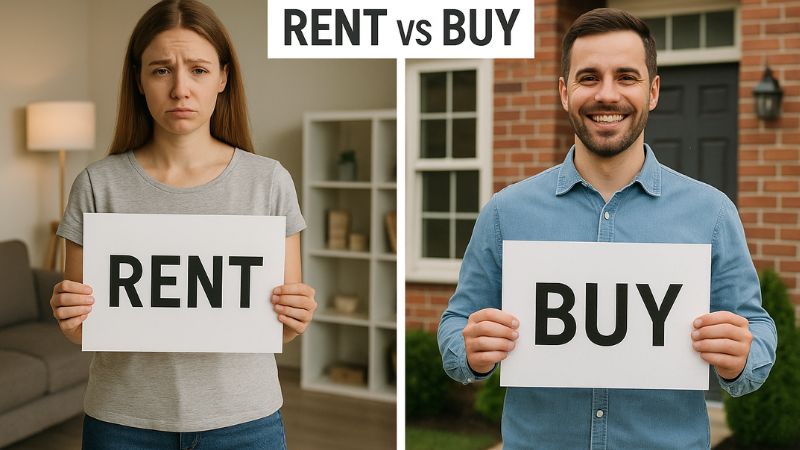
In the U.S. real estate market of 2025, when 30-year mortgage rates remain between 6% and 7%, the topic of “rent or buy” is once again at the forefront of the public’s mind.
In an environment of high interest rates, stabilizing home prices and fluctuating rents, which is the smarter choice?
This guide offers a clear comparison of renting and buying, along with key U.S. real estate trends, to help different people make informed decisions.
Renting VS. Buying: A Comparison Of Pros And Cons
Pros and Cons of Renting
| Advantages | Disadvantages |
|---|---|
| No need for repairs or daily upkeep | Rent may increase |
| High flexibility, easy to relocate | No benefit from property appreciation |
| Low upfront costs | Less residential stability |
| Not affected by property value swings | Cannot customize or renovate the space |
Pros and Cons of Buying
| Advantages | Disadvantages |
|---|---|
| Freedom to renovate or rent out | Responsible for maintenance and repair costs |
| Potential property appreciation | Low flexibility, high relocation costs |
| Greater housing stability | High upfront investment cost |
| More controllable long-term expenses | Risk of potential property value decline |
U.S. Real Estate Market Trends For 2025
As of June 2025, the U.S. real estate market is showing the following key trends:
- Rents continue to rise: The average U.S. rent was $2,024 in April 2025, up 3.4% year-over-year, according to Zillow.
- Mortgage Rates Remain High: The average interest rate on a 30-year fixed-rate mortgage is nearly 7%, and the cost of purchasing a home is rising.
- Housing inventory numbers increase, home price growth slows: There is an oversupply and inventory is increasing, but home prices are still not falling.
Overall, the U.S. real estate market in 2025 is characterized by slower growth and increased inventory, and homebuyers and renters will need to make informed decisions about their own situations.
Financial Comparison: Total Cost Of Renting VS. Buying
| Item | Renting | Buying |
|---|---|---|
| Initial Costs | Security deposit (1–2 months of rent) | Down payment (usually 20%), loan fees, insurance |
| Monthly Payments | Fixed rent | Mortgage + property tax + homeowner’s insurance + HOA fees |
| Maintenance Costs | No out-of-pocket costs | Borne by the homeowner |
| Long-term Asset Gain | None | Potential appreciation; no housing cost after mortgage is paid off |
| Overall Flexibility | High | Low |
| Stability | Low | High |
As you can see from the table above, despite the fact that renting has fewer expenses and more flexibility in the short term, buying a home has more asset-building value and cost stability in the long term.
Who Are The Right People To Rent?
1. You are uncertain about your future plans.
Renting would be a better option for young people who have just graduated and have unstable jobs.
If you want to move to another city in the future, you will be able to do so very quickly.
Overall, renting is more flexible than buying a home.
After all, selling a home can be a lengthy process, especially in today’s volatile U.S. real estate market.
2. You don’t want the hassle of maintaining a home.
One of the major advantages of renting is the savings. Unlike buying a home, you are responsible for repairs and insurance.
If the air conditioner breaks or the washing machine breaks, just tell your landlord and he will take care of it and find someone to fix it for you.
So compared to buying a house, renting a house requires less responsibility.
3. You can’t afford the upfront cost of buying a home for a while.
Buying a home requires a high down payment cost, which can be a barrier for many people.
While there may be some cities with high housing rents, renting is still relatively cost-effective compared to purchasing a home.
For example, you are planning to settle in New York City and currently have two apartments to choose from.
One sells for $1,395,000 and the other rents for $6,680 dollars. While the rent may seem high, renting will be cheaper in the long run.
Who Are The Right People To Buy?
1. You plan to live in the city for a long time and have a stable income.
If you plan to live in the city for at least 5 years, buying a home can be a priority.
This is because the value of the property is going to increase over time, and you can also enjoy tax benefits and avoid rent increases.
In addition, if you have a stable income and can easily afford the upfront costs of buying a home, then buying a home is a wise choice.
2. You want more space and autonomy in your renovations.
If you’re worried about the restrictions and requirements of your landlord, I think owning your own home would be better for you.
You can decorate and whitewash the house as you wish, decide whether you want to adopt a pet, or rent out one of the rooms.
In addition, you no longer have to worry about rent increases and face the possibility of being evicted by your landlord at any time.
Conclusion: How To Make The Best Choice For Your Situation
There is no standard answer to the question of whether to rent or buy a home, and it depends a lot on your career plans, lifestyle, financial situation, and other factors.
When you don’t have a definite answer in mind after reading the above article, the table organized below may play an important role for you:
| Situation | Suggestion |
|---|---|
| Plan to move cities frequently within 3–5 years | Rent |
| Have a stable job and family plan | Buy |
| High interest rates and overheated market | Wait, consider renting first |
| Focus on asset appreciation and tax planning | Buy |
| Interested in Midwest markets from an investment view | Buy (primarily for rental purposes) |
Published on Capstone72.com
Written by your Capstone72 team
FAQ
Is it better to rent or buy in 2025?
Renting or buying a home depends specifically on your goals.
Renting is highly flexible and requires less responsibility and risk, while buying a home allows for asset building as well as rising wealth.
What is the outlook for the real estate market in 2025?
The overall U.S. real estate market is trending moderately upward in 2025, with home price growth expected to average about 3%, but with significant regional differentiation.
Mortgage rates remain high and are expected to end the year at about 6.7%.
Related Reading