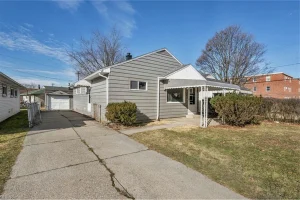
For investors seeking stable returns without the stratospheric price tags of coastal markets, a quiet revolution is underway in the American heartland. Ohio, often overlooked in the frenzy of real estate speculation, is rapidly emerging as a top destination for value-focused investors. Driven by a potent combination of affordability, robust rental yields, and resilient demand in key urban centers, the Buckeye State offers a compelling case for building long-term wealth through rental income.
The Core Appeal: Affordability Meets Yield
The cornerstone of Ohio’s investor appeal is its striking affordability. While coastal and Sun Belt markets have seen prices surge, Ohio’s median home values remain accessible. This lower entry barrier allows investors to acquire properties with significantly less capital outlay, improving cash flow potential from day one. But affordability alone isn’t enough. Ohio pairs this with consistently strong rental yields.
Illustrative Chart: Ohio Median Home Price vs. National Average & Select Markets (Illustrative Data – Q2 2025)
| Market | Median Home Price |
| National Avg | $420,000 |
| San Francisco | $1,350,000 |
| Miami | $580,000 |
| Austin | $520,000 |
| Ohio | $235,000 |
| Columbus (OH) | $285,000 |
| Cleveland (OH) | $180,000 |
(Source: Illustrative composite based on trends from Ohio REALTORS, National Association of REALTORS, local MLS data – Q2 2025)
This significant price differential translates directly into higher capitalization rates and cash-on-cash returns for investors compared to many hotter markets. Gross rental yields in prime Ohio markets often range between 7% and 10%, significantly outpacing the national average and offering tangible income generation.
Illustrative Chart: Average Gross Rental Yield Comparison (Illustrative Data – 2024)
| Market | Avg. Gross Rental Yield |
| National Avg | 5.8% |
| Los Angeles | 4.2% |
| Phoenix | 6.0% |
| Atlanta | 6.5% |
| Ohio Avg | 8.2% |
| Cleveland (OH) | 9.5% |
| Cincinnati (OH) | 8.0% |
(Source: Illustrative data based on aggregations from Zillow Research, Rent Range, local property management reports – 2024)
Demand Drivers: Stability and Growth Engines
Affordability and yield are amplified by strong and growing demand, particularly in Ohio’s major metropolitan areas:
1. Columbus: The Powerhouse: The state capital is Ohio’s undeniable economic engine. Home to The Ohio State University (a massive employer and student population driver), a burgeoning tech scene (with Intel’s $20 billion semiconductor plants under construction as a massive catalyst), major insurance and financial services companies (Nationwide, Huntington), and a diverse economy, Columbus consistently experiences population growth and job creation. This fuels intense demand for both single-family and multi-family rentals, keeping vacancy rates remarkably low. Its relative affordability compared to other major tech hubs attracts young professionals and families alike.
2. Cleveland: The Resilient Reinventor: Cleveland has undergone a significant revitalization. Anchored by world-class healthcare institutions (the Cleveland Clinic, University Hospitals), a strong manufacturing base (including advanced manufacturing and aerospace), and a burgeoning waterfront district, the city offers incredible value. Property prices are among the most attractive for a major metro area, while rental demand remains steady, driven by healthcare workers, students, and a stable core workforce. Its large inventory of older, solidly built housing stock provides ample opportunities for value-add investors.
3. Cincinnati & Dayton: While Columbus and Cleveland often grab headlines, Cincinnati boasts a strong corporate presence (Procter & Gamble, Kroger, Fifth Third Bank) and a revitalized urban core, while Dayton benefits from aerospace/defense (Wright-Patterson AFB) and healthcare. Both offer similar value propositions with solid rental demand.
Midwestern Stability: The Underrated Advantage
Beyond specific cities, Ohio embodies Midwestern economic stability. Its diversified economy – spanning manufacturing, healthcare, education, finance, insurance, logistics, and increasingly technology and research – provides resilience against sector-specific downturns. This stability translates directly into the rental market:
* High Occupancy Rates: Ohio’s major metros consistently report occupancy rates above 95%, significantly reducing the risk of income disruption for landlords. Renters tend to be stable, seeking long-term housing solutions.
* Predictable Cash Flow: The combination of reliable tenant demand, lower property taxes than many coastal states (though varying by locality), and manageable maintenance costs (due to the prevalence of single-family homes and smaller multifamily properties) fosters predictable, positive cash flow – the holy grail for income investors.
* Lower Volatility: Unlike markets prone to speculative bubbles, Ohio’s real estate tends to appreciate steadily rather than explosively, aligning perfectly with a long-term, buy-and-hold strategy focused on cash flow rather than rapid appreciation.
Illustrative Chart: Average Occupancy Rates in Major Ohio Metros (Illustrative Data – Q1 2025)
| Area | Average Occupancy Rate |
| Columbus | 96.5% |
| Cleveland | 95.8% |
| Dayton | 95.2% |
| National Avg | 94.7% |
| Cincinnati | 96.0% |
| **Ohio Avg** | **95.8%** |
(Source: Illustrative composite based on data from CoStar, RealPage, local apartment association reports – Q1 2025)
Considerations for the Value Investor
Of course, no market is without considerations:
* Neighborhood Matters: As in any state, location is paramount. Thorough due diligence on specific neighborhoods within target cities is essential.
* Property Condition: Ohio’s older housing stock, particularly in Cleveland and Cincinnati, requires careful inspection and budgeting for potential maintenance and updates (a value-add opportunity for some).
* Management: Successful investing often hinges on effective property management, whether self-managed or outsourced.
* Interest Rates: Like all real estate, Ohio’s market is sensitive to broader interest rate movements impacting financing costs.
Conclusion: A Compelling Case for Cash Flow
For investors prioritizing steady, reliable rental income over speculative gains, Ohio presents a remarkably strong proposition. Its foundation of affordable acquisition costs, coupled with above-average rental yields and underpinned by strong, stable demand in economically diverse cities like Columbus and Cleveland, creates an environment ripe for long-term wealth building. The high occupancy rates and Midwestern economic resilience further de-risk the investment compared to more volatile markets. While diligent research on specific locations and properties remains crucial, Ohio has firmly positioned itself on the radar of savvy value investors seeking the tangible returns of the heartland. The Buckeye State isn’t just about football; it’s increasingly about solid, dependable real estate returns.
👉 [Get in touch with our investment team]
👉 [Read More U.S. Property Insights]: