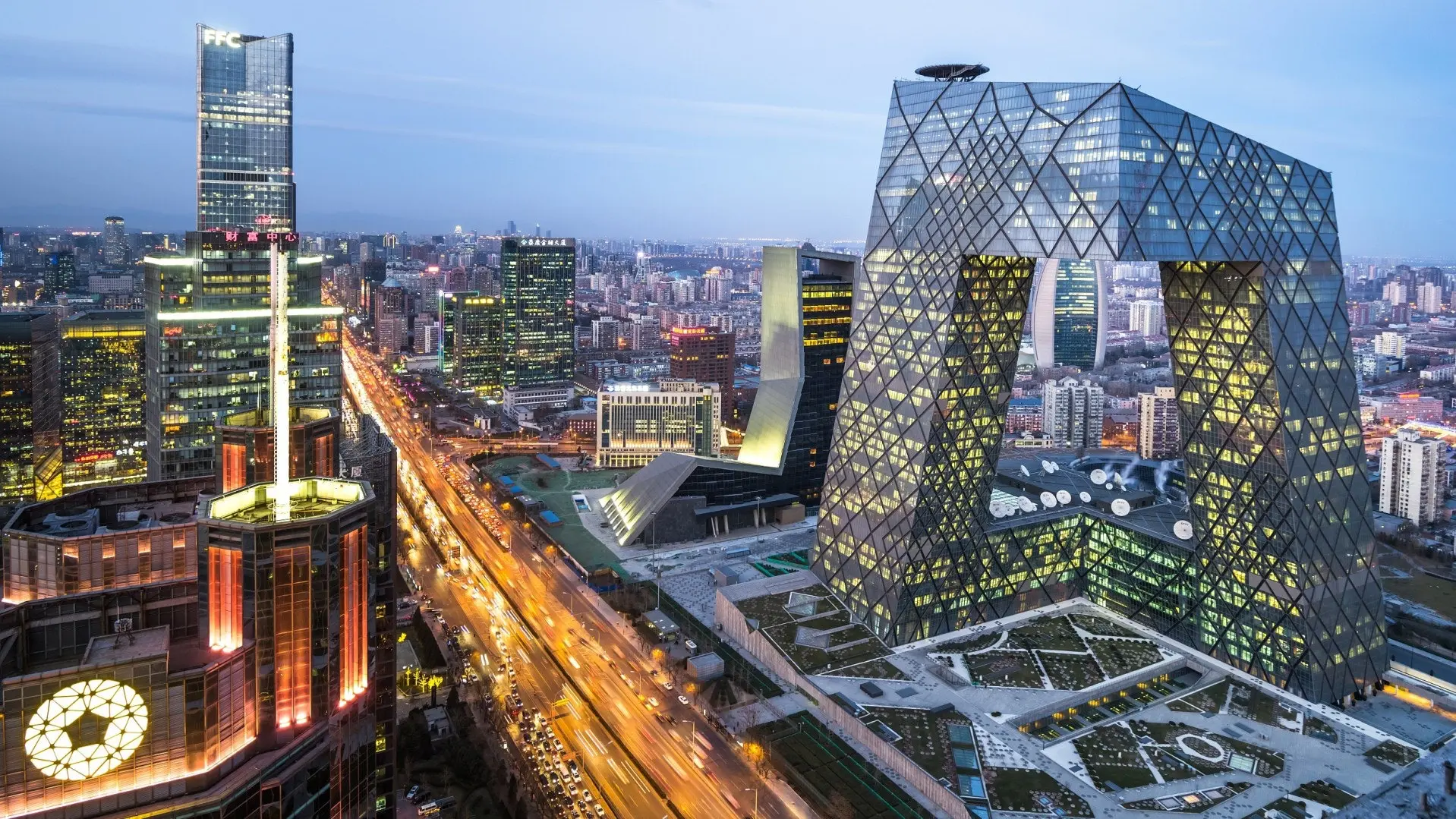
The Beijing real estate market is undergoing a profound shift from rapid expansion to high-quality development. In 2025, Beijing plans to allocate 240–300 hectares of land for commercial housing and 475 hectares for affordable housing, marking the official establishment of a diversified housing supply system that gives equal emphasis to both affordable and commercial housing. With ongoing policy optimization, this megacity of nearly 22 million residents is exploring a new path toward sustainable development.
1. Market transformation: from incremental expansion to stock optimization
Beijing’s real estate market has entered a distinct stage of differentiation. Data from the first half of 2025 shows that Beijing’s land transaction floor area decreased by 13.2% year-on-year, while land transfer revenue rose 37.3% against the trend — indicating that the value of core-location assets continues to gain strong market recognition.
This trend of “enhancing quality while reducing quantity” reflects a fundamental shift in Beijing’s land supply strategy. This year, Beijing is prioritizing land supply around rail transit stations and key functional areas, thereby alleviating pressure on the central districts and making daily life more convenient and efficient for residents.
Like other major international cities, Beijing also faces the challenge of scarce urban land resources. The availability of new residential land within the Fifth Ring Road has nearly been exhausted, causing the market focus to gradually shift beyond the Fifth Ring Road. According to statistics from the second quarter of 2025, the current inventory of new homes outside the Fifth Ring Road accounts for 78.7% of the total inventory.
2. Diversified Residential Demand
Beijing’s housing market is facing multiple demand challenges simultaneously. On one hand, the city needs to provide affordable housing for the large number of graduates and essential service workers entering each year. On the other hand, it must also meet the growing demand for upgraded or better-quality housing.
Notably, Beijing plans to prioritize the rental housing needs of two key groups: university graduates and urban essential service workers. This approach is similar to the housing strategies of other major international cities, such as Hong Kong’s public rental housing and Home Ownership Scheme, which aim to help new residents address temporary housing difficulties and stabilize the core functioning of the city.
Improvement-oriented demand has become the main force in the market. In the first quarter of 2025, units sized between 90 and 200 square meters accounted for 72.4% of total transactions, marking a year-on-year increase of 7%. The market is dominated by improvement-oriented demand, which is consistent with the development trends of major cities around the world.
3. Policy Relaxation: Loosened Purchase Restrictions and Financial Support
In August 2025, Beijing introduced a landmark policy adjustment: there is no longer a limit on the number of commercial housing units that can be purchased outside the Fifth Ring Road. This is regarded as an important signal that Beijing is gradually phasing out its purchase restriction policies.
At the same time, Beijing has increased support for provident fund loans. This includes reducing the down payment ratio for second-home provident fund loans from 60% to 30%, and raising the loan limit from 800,000 yuan to 1.4 million yuan. These measures have significantly lowered the market entry threshold for improvement-oriented demand.
Experts recommend fully lifting housing purchase restrictions, further reducing transaction taxes and fees, and continuing to lower mortgage interest rates—measures that may be gradually implemented in the future.
4. Investment perspective: risks and opportunities coexist
The de-stocking cycle for new homes outside the Fifth Ring Road has exceeded 18 months, significantly higher than in the main urban areas, indicating an intensifying regional divergence.
For investors, Beijing has strengthened risk monitoring and early-warning systems for commercial housing projects, fully implemented the “white list” mechanism for real estate development loans, and enhanced the supervision of presale funds—effectively reducing the risk of unfinished projects and providing a more stable investment environment.
Notably, Beijing is focusing on improving housing quality by launching regular inspection initiatives for completed residential projects. This trend offers differentiated competitive opportunities for developers committed to high-quality construction.
Compared with other real estate markets around the world, Beijing has greater room for policy adjustment, especially in supporting demand for improved housing. In addition to lowering the down payment ratio for second-home provident fund loans and raising loan limits, financial measures such as reducing mortgage interest rates for second homes have not yet been implemented.
5. Urban Renewal: Exploring Value in the Era of Existing Stock
Beijing has entered a development stage focused on urban renewal. In 2025, Beijing plans to carry out comprehensive renovations for 500 old residential communities, while simultaneously promoting aging-friendly upgrades and the development of barrier-free environments.
Beijing also plans to promote the renovation of dilapidated buildings, launching a renovation project covering 200,000 square meters. Such projects often require substantial funding and extensive community coordination, but their successful implementation can significantly enhance the city’s appearance and improve residents’ well-being.
6. Long-term Trend: From “Having a Place to Live” to “Living Well and Comfortably”
The long-term transformation direction of Beijing’s real estate market has become clear. The city is committed to promoting the “Four Goods” initiative—good houses, good residential complexes, good communities, and good urban districts—marking a shift from merely meeting basic housing needs to enhancing overall living quality.
For investors, understanding the key points of the Beijing real estate policies lies in grasping the dual-track approach of “Security + market.” On one hand, affordable housing meets basic residential needs; on the other hand, market-based commercial housing offers a variety of choices.
The future recovery of Beijing’s real estate market will depend not only on the relaxation of policies but also on whether housing can meet residents’ actual needs. As China’s economic development enters a new stage, high-quality living has become a new engine driving the healthy growth of the real estate market.
From a global perspective, Beijing’s real estate market adjustments are not unique; many international metropolitan cities have undergone similar development phases. With continued policy optimization and market self-correction, Beijing is expected to develop a more mature and stable real estate market in the near future.
Related Reading