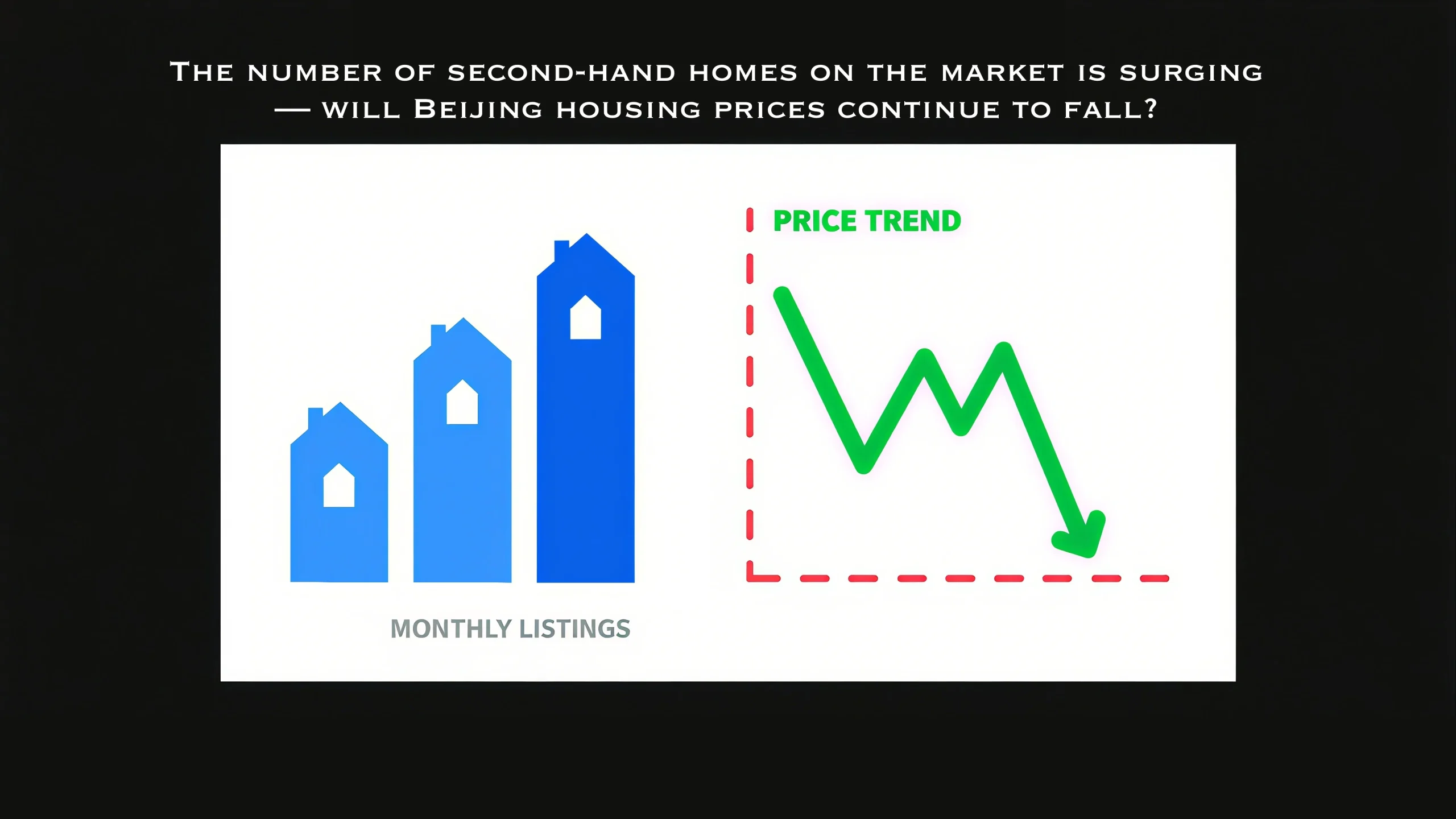
Recently, a notable trend has appeared in Beijing’s second-hand housing market: listings have been increasing, but transactions have not grown at the same rate. This trend has sparked discussion about whether Beijing’s housing prices will continue to fall. This trend has sparked discussion about whether Beijing housing prices will continue to fall.
| month | Online signing volume (sets) |
| January | 12480 |
| February | 11876 |
| March | 19233 |
| April | 15569 |
| May | 14277 |
| June | 15139 |
Beijing’s second-hand residential online signing volume from January to June 2025
According to data from the Beijing Municipal Commission of Housing and Urban-Rural Development, in June 2025, the number of second-hand homes listed for sale exceeded 160,000 units, an increase of 31,100 units compared with 128,900 units in February, representing a cumulative growth of 24.13% and an average monthly compound growth rate of 5.55%. In contrast, the transaction volume of second-hand homes saw a sharp decline in March and did not show a significant rebound in the following months.
Meanwhile, housing prices in some areas have experienced a correction, particularly in the outer suburbs and in segments where the appeal of school districts has weakened. On the other hand, prices of high-end residences in core areas have remained resilient, with even a slight increase.
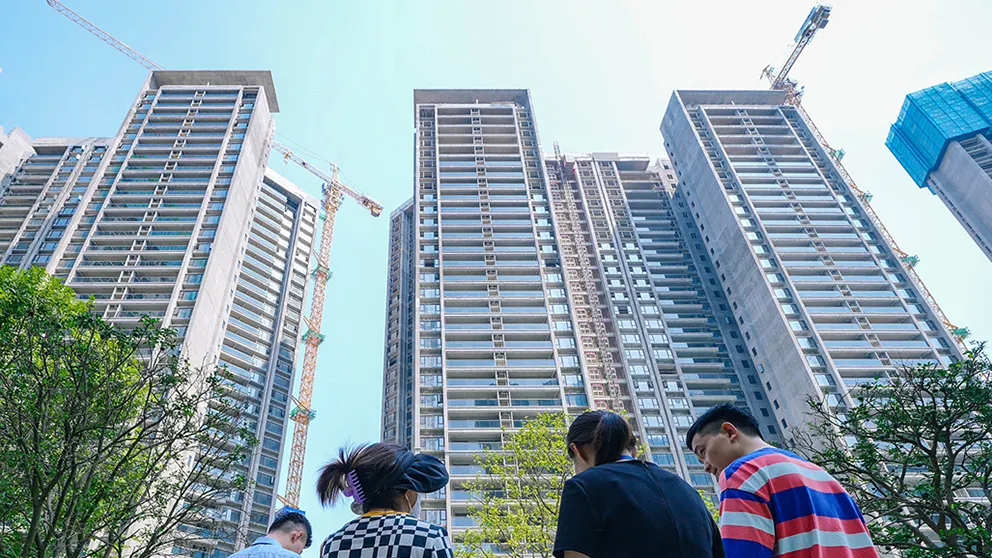
This divergence reflects profound changes in the market’s supply–demand dynamics. This article will examine the true state of Beijing’s second-hand housing market from three perspectives: the reasons behind the surge in listings, an analysis of housing price trends, and forecasts for the future market.
1. Why has the number of second-hand housing listings in Beijing surged?
(1) Concentrated release of replacement demand
From 2024 to 2025, Beijing’s property market policies underwent multiple rounds of adjustments, including the relaxation of the “recognize property, not loans” rule, reductions in mortgage interest rates, and the removal of purchase restrictions in certain areas. These adjustments stimulated the release of upgrade-oriented demand, with many households opting to “sell the old and buy the new,” leading to a short-term surge in the supply of second-hand homes.
(2) Investors cash out and leave
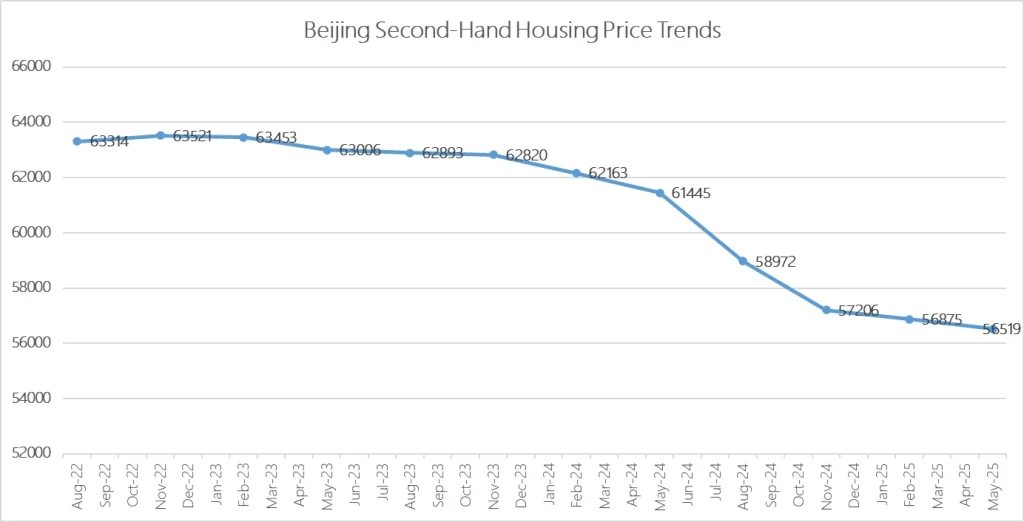
Unit: Yuan/square meter
In the past two years, Beijing’s second-hand housing prices have fallen, and some owners of investment properties have begun to sell, especially properties in non-core areas.
(3) Impact of school district housing policy adjustments
In recent years, Beijing has continued to promote the “multi-school district allocation” policy and teacher rotation, which has compressed the premium space of traditional top school district properties (such as Desheng in Xicheng and Wanliu in Haidian). As a result, some homeowners have chosen to cash out, leading to an increase in the number of listings.
(4) Impact of New Home Supply
In the second quarter of 2025, the supply of new luxury apartments in Beijing reached approximately 3,300 units, with total supply in the first half of the year already exceeding the full-year level of 2024. Meanwhile, the prices of newly built homes fell by 2.3% quarter-on-quarter. The “higher supply, lower prices” situation has given buyers more choices, further intensifying competition in the second-hand housing market.
2. Will Beijing housing prices continue to fall? Key Factor Analysis
| District | House price (yuan/㎡) | Year-on-year | Month-on-month |
| Xicheng District | 119888 | -5.89% | +0.98% |
| Dongcheng District | 97021 | -8.16% | +0.22% |
| Haidian District | 89772 | -7.59% | -0.34% |
| Changping District | 36437 | -9.46% | -0.15% |
| Daxing District | 36107 | -10.89% | -0.04% |
| Tongzhou District | 35708 | -8.69% | -0.1% |
| Fangshan District | 23275 | -8.18% | +1.49% |
| Huairou District | 22964 | -12.21% | -0.16% |
| Miyun District | 18249 | -10.66% | -0.49% |
June 2025 Second-Hand Housing Prices by District in Beijing
(1) Core Areas vs. Suburbs: Widening Housing Price Divergence
- Core areas (Dongcheng, Xicheng, Haidian): Supported by prime locations and scarce resources, housing prices show relatively strong resistance to declines, with some luxury properties even rising against the market trend.
- Inner suburbs (Changping, Daxing, Tongzhou): With underdeveloped amenities and high inventory pressure, prices for most housing projects have adjusted by around 10%.
- Outer suburbs (Fangshan, Huairou, Miyun): With limited demand, these areas face the greatest downward pressure on housing prices, and the average price has already fallen back to 2016 levels.
(2) Policy Adjustments: Can Eased Purchase Restrictions Stabilize Housing Prices?
In 2025, Beijing eased purchase restrictions in non-core areas such as Tongzhou and Daxing and reduced down payment ratios. However, these measures have not changed the overall market trend, unless stronger stimulus policies are introduced—such as a complete removal of purchase restrictions or more substantial reductions in transaction taxes and fees.
(3) Supply and Demand: High Inventory Levels and the Emergence of a Buyer’s Market
Based on sales over the past three months, the current de-stocking cycle for second-hand homes in Beijing is around 10 to 11 months, exceeding the healthy range of 6 to 9 months. This has strengthened buyers’ bargaining power.
(4) Future expectations: Homebuyers remain cautious
Due to slowing economic growth and declining income expectations, many rigid-demand buyers are becoming more cautious in their decisions, further suppressing housing price increases.
3. Forecast of future market trends
Based on the current market situation, Beijing housing prices may show the following trends in the short term:
- Housing prices in core areas remain relatively stable, with some scarce luxury properties still having room for appreciation. In suburban areas, prices may continue to decline by 5% to 10%.
- Due to high inventory levels, the transaction cycle for second-hand homes has lengthened, giving buyers more room to negotiate.
- Policy adjustments remain a key variable. If more forceful stimulus is introduced, the market is expected to stabilize and rebound.
- As a super-tier and capital city, Beijing has strong fundamental support in terms of population, industry, and resources. In the long term, Beijing’s real estate still holds an irreplaceable position. However, the era of broad-based price increases has ended, making location and quality the key factors for future property choices.

For homebuyers, Beijing’s second-hand housing market has now entered a buyer’s market. Rigid-demand buyers can focus on cost-effective opportunities, especially in inner suburban areas with relatively well-developed amenities. However, investment should be approached with caution, as housing prices are unlikely to see significant growth in the short term, leaving limited room for arbitrage.
The future trend of Beijing’s housing prices will still depend on the strength of policy measures and the pace of economic recovery. It is advisable to closely monitor new real estate policies and market transaction data to make more informed decisions.
Related Reading