Over the past few years, the changes in the Greater Bay Area have been obvious to all. It’s not just that transportation is more convenient and industries are more concentrated, but also the connection between cities is getting closer and closer.
For many people who are concerned about real estate, this area is no longer just a choice for living, but also a new direction for investment.
Greater Bay Area real estate investment is gradually becoming a realistic and feasible point of opportunity worth studying.
So, at a stage like 2025, how should you buy real estate in the Greater Bay Area?
Which cities and regions are more promising? And what investment logic is worth referring to?
This article will focus on these questions, combined with regional characteristics, market trends, and investment potential, to bring you a clear and practical guide to buying real estate.
Why Choose the Greater Bay Area for Real Estate Investment?
Real estate investment is not just about choosing a popular city but also about considering the long-term development potential and policy support of the region.
The Greater Bay Area, a key engine of China’s economy, has demonstrated strong growth momentum and attracted a large inflow of capital.
From upgraded transportation networks to supportive industrial policies to trends in population mobility, it has brought new opportunities to the real estate market here.
Next, we’ll take a closer look at what makes the Greater Bay Area a “hot spot” for investors and what unique advantages it offers.
Policy Support & Development Strategies
To determine whether an area is worth investing in, you need to pay attention not only to the market performance but also to the policy direction and overall development strategy.
The construction of the Greater Bay Area is coordinated at the central level, with the core objective of creating a world-class city cluster that is open, innovative, and efficient.
This strategy covers nine cities in Guangdong as well as Hong Kong and Macao. The overall upgrading of the region will be promoted through infrastructure connectivity, industrial division of labor synergy, and free flow of talents. The changes brought by the policy are not only reflected in transportation and industry but also affect the real estate market in the Greater Bay Area.
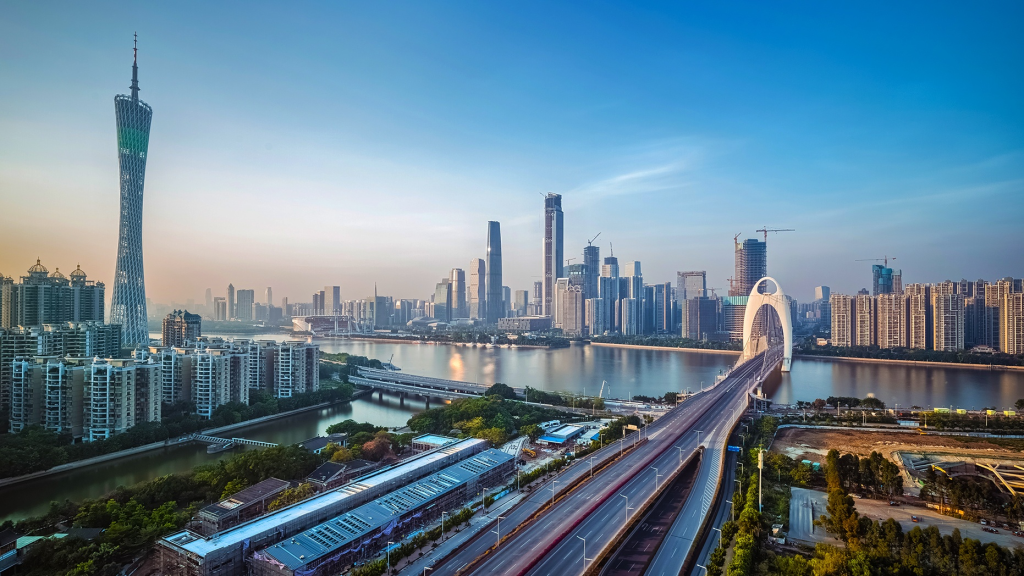
In terms of positioning, Shenzhen is a core city for technological innovation and financial openness, with a fast pace of development and a concentration of talent and enterprises.
Guangzhou continues to build on its strengths as a comprehensive service and transportation hub, and its industrial structure has become more diversified. Hong Kong continues to capitalize on its strengths in international finance and trade, maintaining its unique location and institutional value.
As for the cities of Zhuhai and Zhongshan, they mainly undertake the expanded functions of the core cities and gradually become an important corridor connecting Hong Kong, Macao, and the mainland.
This pattern of development with a clear division of labor and a coordinated pace can provide you with clearer market expectations.
Which Greater Bay Area Real Estate is a Better Value?
The heat of the market, the entry threshold, and the room for return will ultimately fall on the actual performance of each city. There are different levels of development within the Greater Bay Area and different investment logics.
In order to more clearly determine which regions are more attractive, we can start a specific comparison at the city level.
Shenzhen
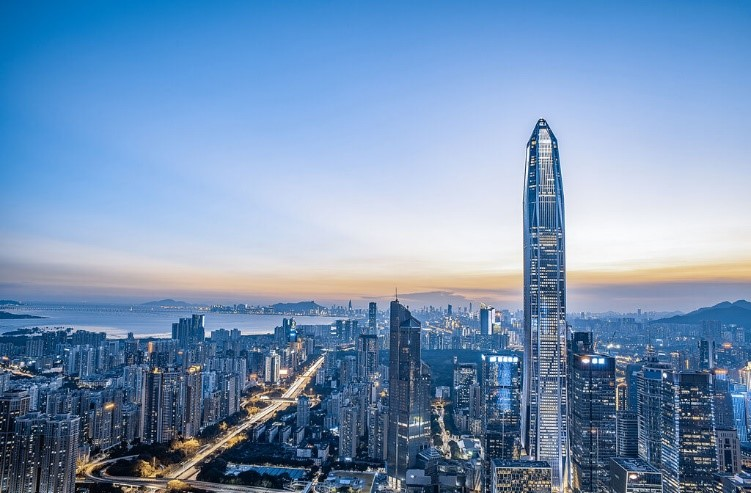
As a core city for technological innovation and financial openness, Shenzhen’s real estate market has always been popular with investors. However, the market environment has changed in 2025, and it is worth your while to take a deeper look.
According to the latest data, Shenzhen’s new commercial residential prices fell 2.6% year-on-year in May 2025, reflecting relatively weak market demand. Between January and February 2025, national investment in real estate development fell 9.8% year-on-year, with investment in residential construction falling 9.2%. This trend is also reflected in Shenzhen, and although specific figures have not yet been released, the overall slowdown in the market cannot be ignored.
However, Shenzhen’s real estate market is not in the doldrums. According to data released by the Shenzhen Municipal Government, the real estate market in Shenzhen showed signs of picking up in the first quarter of 2025.
Fourteen new projects are expected to enter the market in 2025, with a total supply area of 893,000 square meters, and Shenzhen’s Grade A office inventory is expected to grow by 7.9% by the end of the year. This change suggests that the commercial real estate market in Shenzhen remains attractive, especially for investors looking for long-term stable returns.
In such a market environment, you should be even more careful in choosing an investment area. Like Futian, Nanshan’s house prices are relatively high, but the demand for leasing is stable. Longgang, Bao’an, and other peripheral areas, although the house prices are lower, if the future supporting facilities and transportation are more complete, then their future development potential is also relatively large.
The Shenzhen Municipal Government plans to build at least 1 million units of protected housing by 2035, with the goal of accommodating 60% of the resident population. This policy may have a profound impact on the market supply and demand.
In conclusion, Shenzhen’s real estate market faces certain challenges in 2025 but also holds opportunities. We hope you will consider the market trend, regional development, and policy orientation when making investment decisions and make a wise choice.
Guangzhou
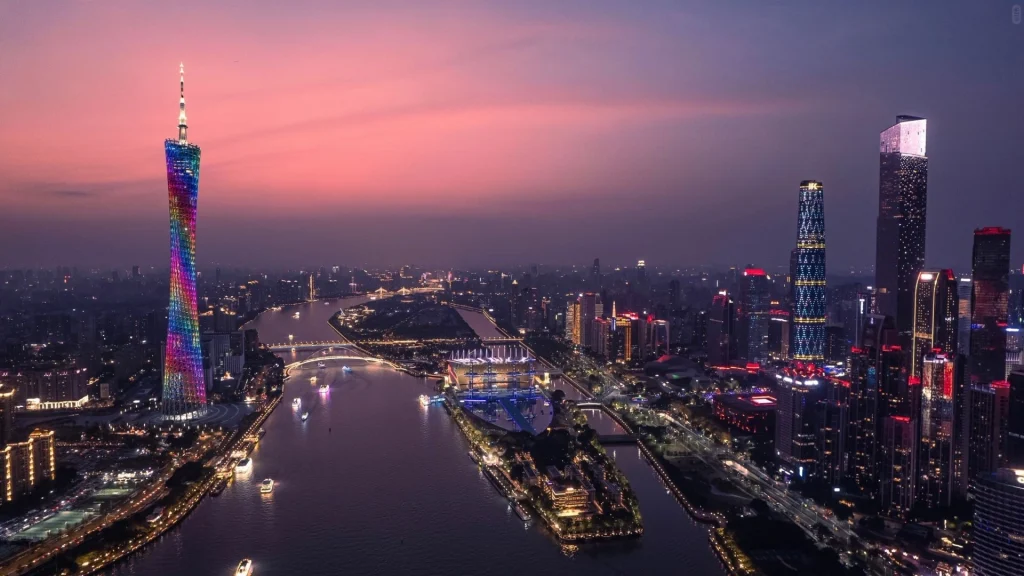
Guangzhou is the capital of Guangdong Province, with a strong economic base and a diversified industrial structure, including traditional manufacturing industries as well as the active development of modern service and financial industries. It drives activity in both residential and commercial real estate markets.
According to Anjuke, in May 2025, the average unit price of new commercial residential properties in Guangzhou was RMB 35,673 per square meter, a decrease of 0.44% year-on-year and a flat year-on-year. The price varies greatly among regions, with Haizhu and Tianhe districts having relatively high prices of RMB 81,900/m² and RMB 78,544/m² respectively; while Zengcheng and Conghua districts have relatively low prices of RMB 16,966/m² and RMB 13,055/m² respectively.
Furthermore, according to the data of China Index Cloud, from January to May 2025, the transaction area of commodity residential (excluding protected housing) in Guangzhou was 2,725,000 m², and the number of units sold was 24,944 units. In May 2025, the transaction area of commodity residential was 668,000 m², and the number of units sold was 5,827 units, and the average price of newly built residential was RMB 24,975/m², which was a year-on-year increase of 0.92%.
From these data, it can be seen that Guangzhou’s real estate market shows some stability in 2025. Despite fluctuations in prices in some areas, the overall market remains active. For investors, Guangzhou offers a diverse range of choices, with different regions offering varying home prices and development potential.
Zhuhai and Zhongshan
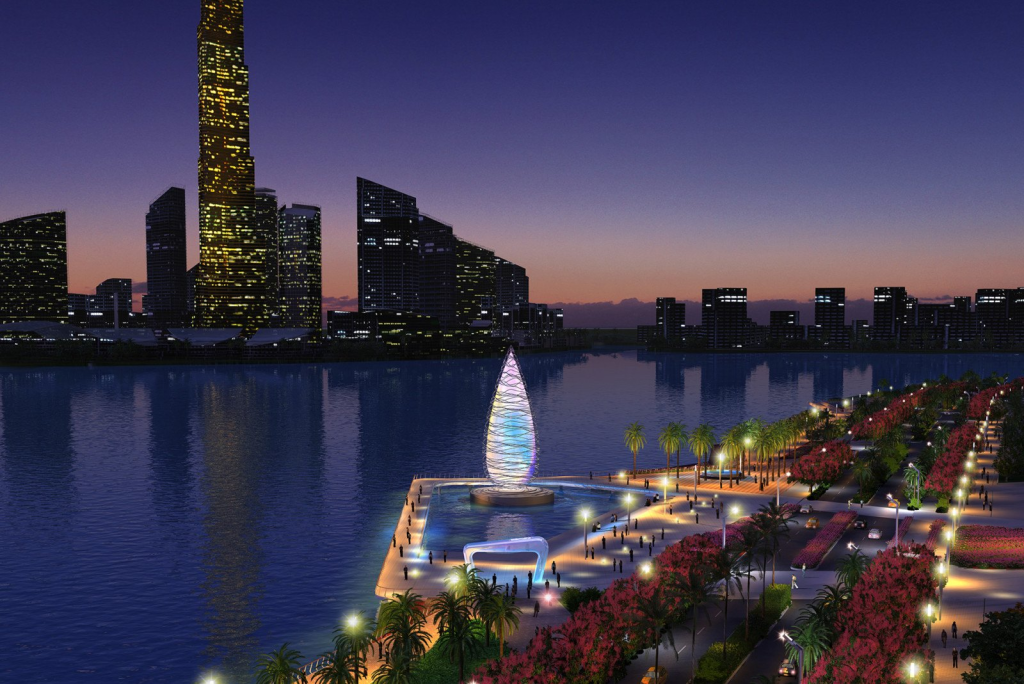
Among the real estate markets in the Greater Bay Area, Zhuhai and Zhongshan are not as highly regarded as Shenzhen and Guangzhou, but can be worth investing in due to their unique location and policy advantages.
Zhuhai has made significant progress in recent years in terms of policy support and infrastructure development. 2025 In the first quarter, Zhuhai’s residential online transactions totaled 4,874 units, an increase of approximately 15.88% year-on-year.
However, the average residential price was approximately RMB24,094 per square meter, a year-on-year decrease of approximately 6.62%. This suggests that prices are still in a phase of adjustment despite the increase in transaction volume.
It is worth noting that Zhuhai’s inventory pressure is high, with residential inventory at 3,344,300 square meters and a destocking cycle of about 21.02 months. This means that the market is still in the destocking stage. You need to pay attention to the speed of depopulation and regional development potential when choosing projects.
Zhongshan, a neighboring city of Zhuhai, has made progress in industrial transformation and infrastructure construction in recent years.
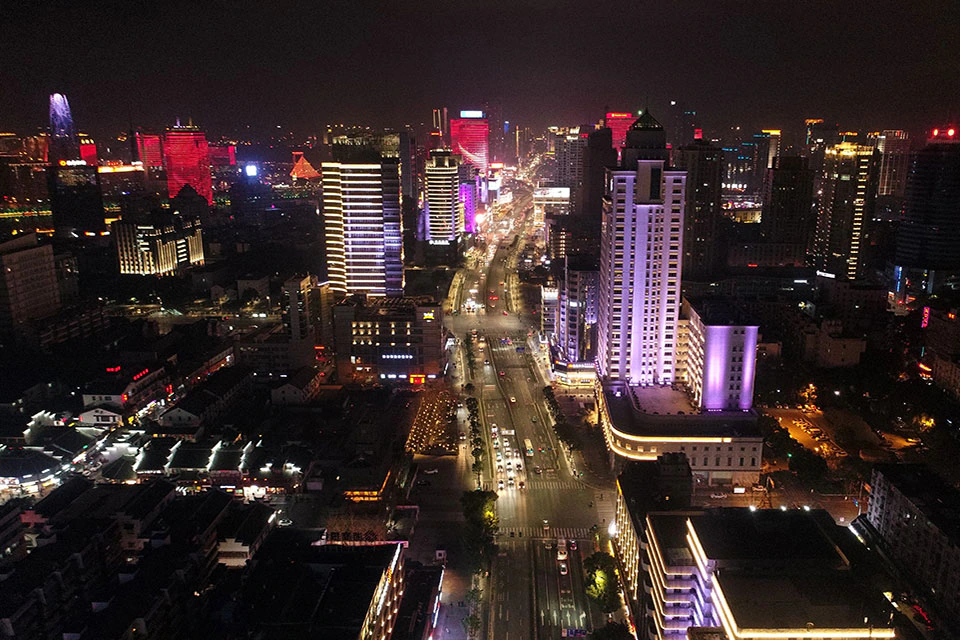
According to Anjuke’s data, the average price of new homes in different areas of Zhongshan varies widely, with the East District around RMB 20,000/sqm, the South District around RMB 17,333/sqm, and the Shiqi District around RMB 16,257/sqm.
The real estate market in Zhongshan is relatively stable with fewer price fluctuations and potentially more robust returns.
What to Consider Before Investing?
As you read this, you may have already made your initial judgment about the urban landscape of the Greater Bay Area. What you still have to consider is where you want to invest: what is your budget range? Are you more interested in solid returns, or are you looking to capitalize on value-added opportunities?
Capital Planning & Holding Costs
Many people look at home prices at first, but when they actually buy and hold for a few years, they realize that the various hidden costs go far beyond the purchase price. If you are planning to invest in real estate in the Greater Bay Area, you may want to do a careful total first.
Apart from the down payment and loan interest, the tax involved in the home purchase process is a realistic expense that must be considered. In Guangdong Province, for example, the deed tax for ordinary residential properties is generally 1% to 1.5%, while that for non-ordinary residential properties or second suites may reach 3%.
In addition, property transactions also involve charges such as stamp duty, value-added tax, and surcharges. These costs will increase, especially if the property is transferred to someone else for a short period of time.

Expenses during the holding period are also considerable. Property management fees vary from city to city and project to project, with quality neighborhoods in first-tier cities usually around 3-6 RMB/m² per month, and even higher for some high-end residences.
If the house is vacant, in addition to no rental income, you also have to bear the property, water, electricity, and other fixed costs. In terms of vacancy rates, popular neighborhoods in core cities such as Shenzhen and Guangzhou are usually low, but peripheral areas and new development zones are relatively volatile.
So, before you invest, it’s best to assess the return cycle in relation to the rental market conditions.
By the way, there are differences between locals and foreigners in terms of eligibility and credit policies for home ownership. For example, some cities have social security or tax year requirements for non-local home buyers, and loan interest rates and down payment ratios may also be different.
You should try to do a simple cost of ownership measurement. Sometimes it’s not the house itself that’s expensive; it’s the fact that you don’t realize that it’s not cheap to “keep.”
Market Cycles & Risk Identification
Even if you have chosen the right city and calculated the cost, you still need to look at the right time. Real estate is cyclical, and getting in at different stages can have completely different results.
So, how do you tell which stage the market is in? And how do you avoid projects that look busy but are actually hard to rent?
Generally speaking, the real estate market is often close to the “hot top” when the transaction volume rises sharply and the price climbs rapidly; while the transaction volume is low, the price is stable or even slightly downward, but more worthy of attention.
You can pay more attention to a few basic signals: Have developers’ promotional efforts increased significantly? Are intermediaries pushing the market more frequently? Whether the official began to frequently introduce control or “market support” policies? These changes can reveal a shift in market sentiment.
Also, some properties are located in remote areas, poor supporting facilities, but due to publicity or temporary heat, the price is speculated to be very high, but the rent does not go, resulting in the formation of a “high price, low rent,” a typical trap.
This type of project is difficult to rent in the short term, and in the long term, it is not easy to change hands. Poor liquidity means that the type of investor is most likely to step into the pit.
If you want to avoid these risks, then you should ask more detailed questions when you look at the property. For example, the real rent level in the neighborhood, the actual occupancy rate, and the difference between the second-hand transaction price in a few years. These figures are always more honest than model homes.
Conclusion
The Greater Bay Area real estate market presents a clearer structural differentiation and investment logic in 2025. Differences in policy support, industrial positioning, and market performance of different cities provide you with diverse space for choice.
At a time when the trend is complex, what you are bound to do is rational judgment and information preparation.
Related Reading