1. Introduction
In the international financial arena, a “safe haven” asset refers to an investment that can maintain its value or even appreciate during periods of economic turmoil, market volatility, inflationary pressure, or geopolitical uncertainty. Gold, U.S. Treasury bonds, and real estate in prime locations have all been typical examples.
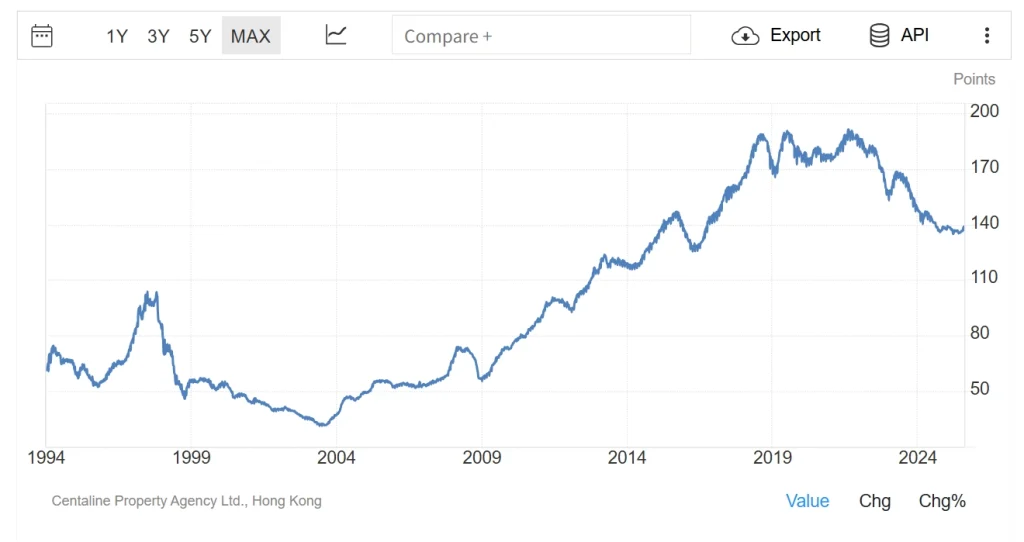
source: Centaline Property Agency Ltd., Hong Kong
Over the past few decades, the Hong Kong real estate market has been regarded as a safe haven for investors due to factors such as scarce land resources, a stable legal system, and international capital flows. However, since 2020, the combined impact of the epidemic, a high interest rate cycle, and intensified regional competition has challenged this label.
So, in 2025, will the Hong Kong property market still have the attributes of a safe haven? We analyze from three aspects: historical performance, current conditions and future trends.
2. The “Safe Haven” Performance of Hong Kong Real Estate Market
- International financial center status
As the world’s third-largest financial center, Hong Kong has attracted substantial international capital and the headquarters of numerous corporations, driving housing demand among high-income groups.
- Scarcity
Hong Kong has a total area of approximately 1,105 square kilometres. In 2015, only about 77 square kilometres were planned for residential use, accounting for approximately 7% of the total area. As long as the population continues to grow, the contradiction between supply and demand will continue to exist.
- Solid legal and financial systems
Hong Kong follows a common law system with a well-established property rights framework, providing strong legal protection for assets. At the same time, the linked exchange rate system, which pegs the Hong Kong dollar to the US dollar, stabilizes the currency’s value and reduces foreign exchange risk. These systems are particularly important for foreign investors.
- Long-term appreciation trend
Since the 1970s, Hong Kong’s housing prices have shown a long-term upward trend in multiple economic cycles. Even when adjustments occurred during major events such as the 1997 Asian financial crisis, the 2003 SARS epidemic, and the 2008 financial crisis, prices usually recovered and reached new highs in the short term.
These qualities have shaped Hong Kong’s reputation as a safe haven for the property market.
3. Factors that Support Hong Kong’s Safe Haven Status
- The value of core locations remains irreplaceable
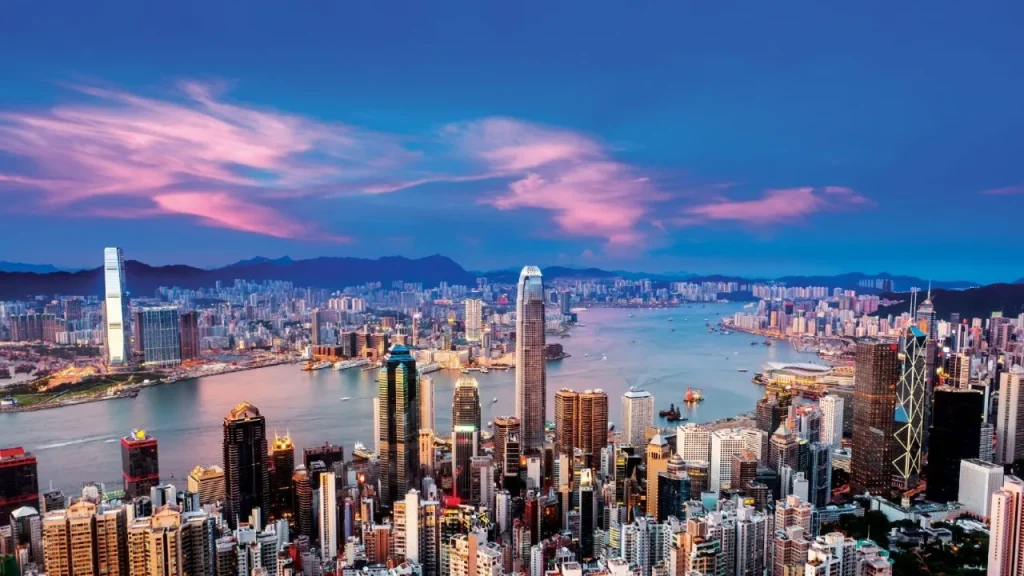
Properties in core areas such as Mid-Levels, Kowloon Station, and both sides of Victoria Harbour have extremely limited supply, with buyers mostly high-net-worth individuals, resulting in stronger resistance to price declines compared to the overall market.
- Stability of the Hong Kong dollar
The Hong Kong dollar’s peg to the US dollar reduces exchange rate volatility, making it especially attractive during times of global currency instability.
- The Greater Bay Area and Its Status as an International Financial Center
Hong Kong remains the world’s third largest financial center. With the integration and development of the Greater Bay Area, economic cooperation with cities like Shenzhen and Guangzhou helps support long-term stable demand for both commercial and residential properties.
- Policy shifts to easing
The government has eased real estate market regulations by removing additional stamp duties—such as the Special Stamp Duty (SSD), Buyer’s Stamp Duty (BSD), and New Residential Stamp Duty (NRSD)—starting from February 28, 2024, which will support investment demand.
4. Factors Weakening the Safe Haven Attributes
- High interest rates suppress investment returns
Since the Federal Reserve entered a rate-hiking cycle in 2022, Hong Kong mortgage rates have risen to their highest levels in 15 years, causing rental yields to decline significantly after interest costs and substantially increasing the cost of holding property.
- Increased price volatility
Since 2021, the Hong Kong housing price index has fallen by about 25%-30% from its peak. Although a crash has not occurred, the short-term resilience to price declines has weakened.
- Intensified regional competition
The political stability, tax policies and higher rental returns in markets such as Singapore and Tokyo have diverted some international capital.
- Rising liquidity risks
With changes in the macroeconomic environment and rising interest rates, the transaction cycle for mid- to high-end properties has lengthened by 2 to 3 months compared to previous periods. If investors need to cash out urgently, they may have to sell at a discount.
5. Does Hong Kong still Have Safe Haven Attributes?
Combining historical and current situations, the safe haven attribute of Hong Kong real estate still exists, but it has shifted from “absolute safety” to “conditional safety.” In other words, Hong Kong’s real estate market is no longer a place where you can “buy blindly and guarantee profits”; instead, it is an investment arena that requires professional judgment and a long-term perspective to realize its safe-haven potential.
6. Investor Response Strategies
- Focus on core assets
Investing in areas with extremely limited supply and long-term popularity, such as Mid-Levels Central, Hong Kong Island South, Kowloon Station, and properties with Victoria Harbour views, will be more resilient to price declines.
- Focus on the Stability of the Rental Market
Choose property types with stable demand to ensure steady cash flow, such as small to medium-sized units near business districts or high-end serviced apartments.
- Choose the right time to enter the market
During market adjustment periods, adopt a phased investment approach to increase the margin of safety; avoid chasing high prices to guard against short-term price volatility.
- Combined configuration
For investors with sufficient funds, they can combine Hong Kong properties with other international assets (such as Singapore, London and New York) to diversify risks.
7. Conclusion
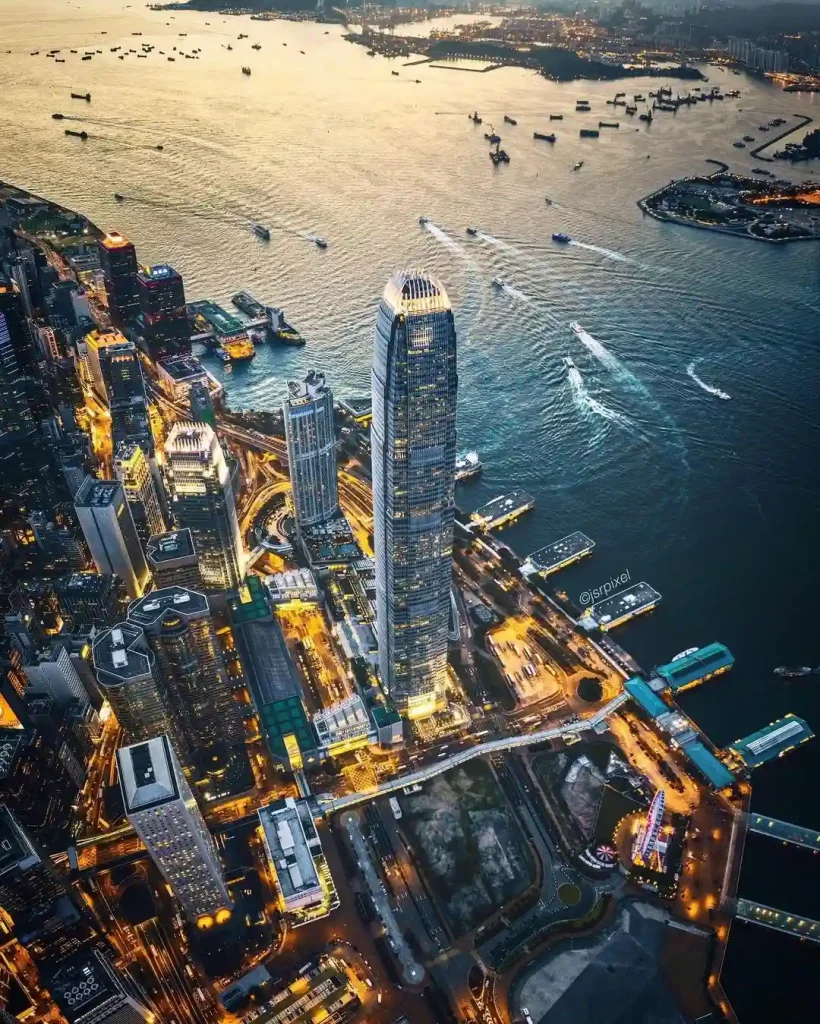
The Hong Kong real estate market will still retain its core characteristics as a safe haven in 2025—its scarcity, level of internationalization, and long-term capital preservation capabilities—but its defensiveness is no longer as “impregnable” as in the past.
For long-term investors focused on asset preservation, properties in Hong Kong’s core areas remain a reliable choice. However, for investors who engage in short-term speculation or high-leverage operations, the risks in the current market environment have increased significantly.
Overall, Hong Kong real estate can still be a safe haven, but it requires more precise selection.
Related Reading